A steady hand on the guns
Two reports came in from the hull theaters. From the sea: the gunsight is twitchy — swing onto a target and the crosshair sails past it, so you saw back and forth across the hull and never settle. From the steppe: the game is unplayable — the sight stares into dirt, shells burst on the ground in front of your own tracks, parachutes hang in the sky forever, and you can't find anyone to shoot anyway. Both were right. This pass fixes the hand, the eye, and the map.
The crosshair does what your hand does
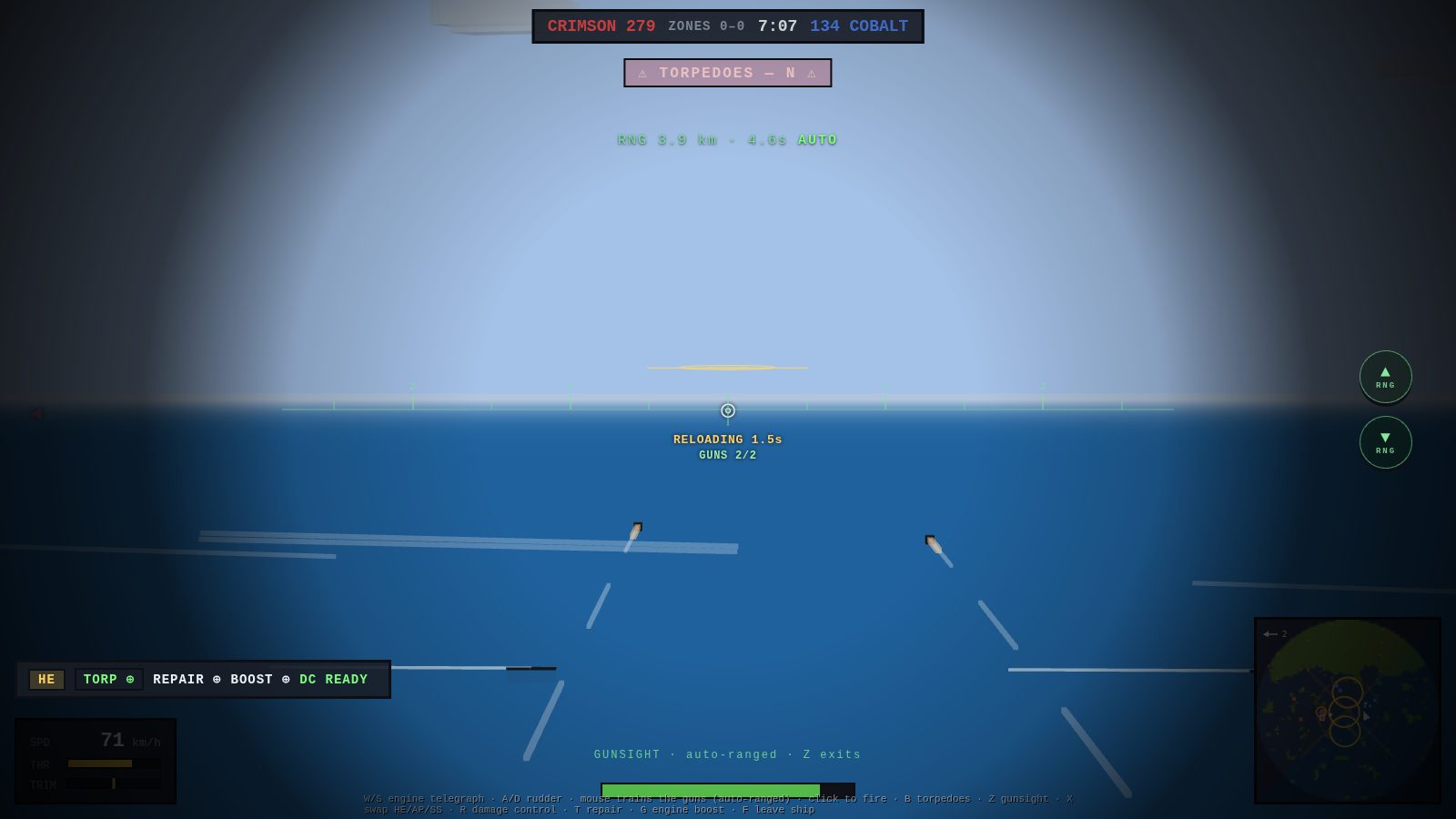
The warship gunsight used to work like a joystick: nudge the mouse off centre and the turrets started slewing, and the further you pushed the faster they swung. Fine for hosing lead at aircraft — miserable for laying a crosshair on a hull, because stopping was a whole separate move. You had to yank back to centre at the exact instant the sight crossed the target, and nobody's hand does that. So the sight sailed past, you reversed, it sailed past the other way, and naval gunnery became a wrestling match with your own aim.
Now the crosshair simply goes where your hand goes: move the mouse an inch and the sight moves an inch, and when your hand stops, the sight stops. Dead. The turrets chase the crosshair at their own heavy mechanical pace and settle on it — which is exactly what a turret is supposed to do. The old drift is gone. Swing onto a hull, stop, and the reticle is there, ready to fire. Playing with a stick or a thumbstick? Those still steer the way a stick should, because there a joystick is honest.
Rings that whisper instead of wall
The naval capture zone used to draw a thick gold ring on the sea — and from inside it, that ring became a glowing wall right across the horizon you were trying to read distant hulls against. Now it's a faint whisper, and it disappears entirely the moment you raise the gunsight, so nothing stands between you and a target silhouette. The minimap still shows the zone clean and clear when you want to check it. The minimap also finally shows you: captains and tank drivers used to be an anonymous team-colored dot, but now a white arrow rides your own hull and points down your gun line, in every theater.
The tank that shelled its own doorstep
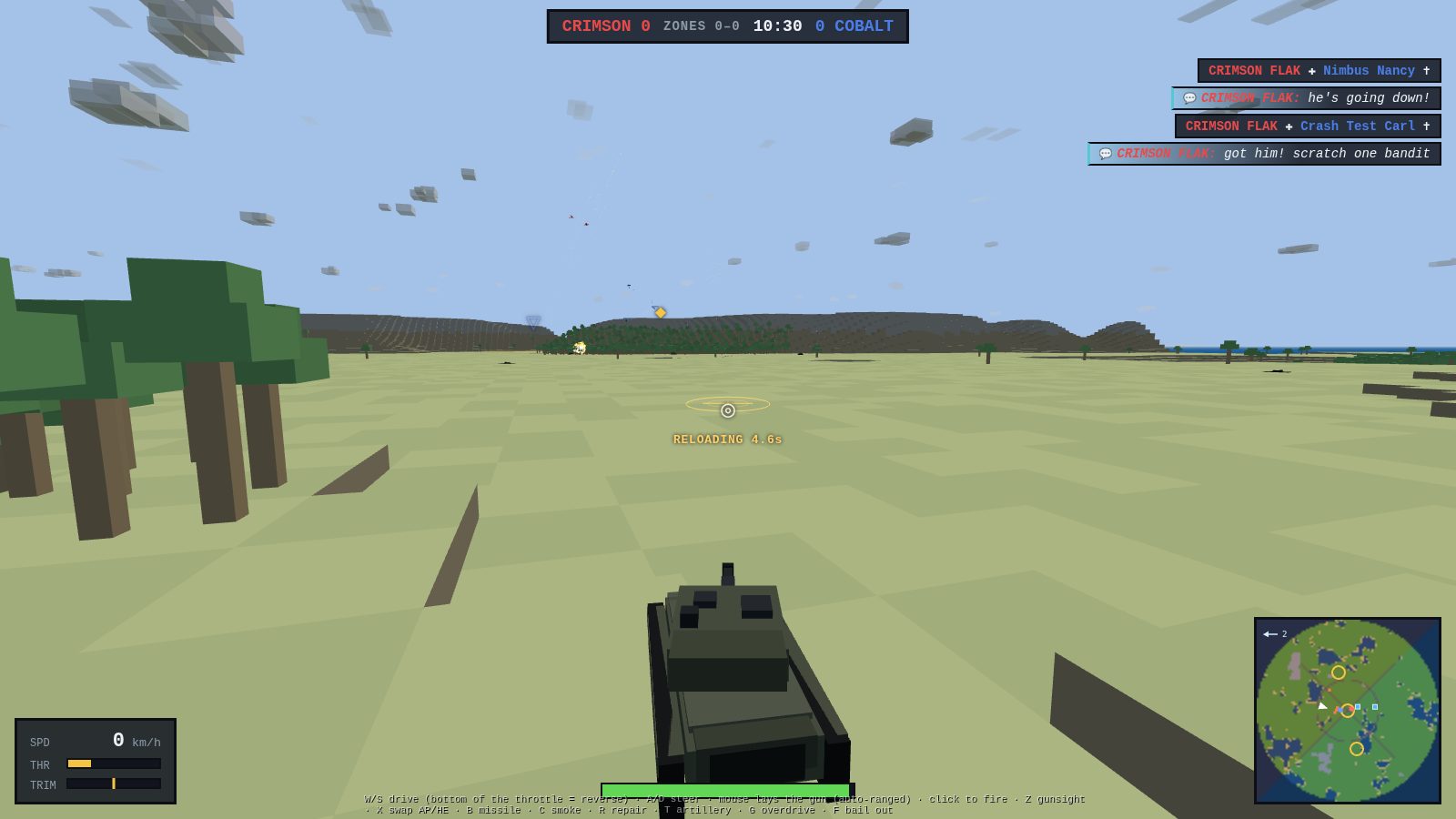
On the steppe, tank gunnery was broken in the most maddening way: your sight looked straight into the dirt of the little rise right in front of your tracks, and when you fired, the shell burst in that dirt a few metres out and blew up in your own face. The AI tanks suffered it too — half the “shells exploding right in front of the vehicle” was the bots doing it to themselves.
Now the gunner's eye and the gun barrel both ride up where a real tank's sights are — a periscope's view over the crest your hull is tucked behind — so you see the battlefield, not the mud. A shell fired over that near lip clears it and flies on to where you aimed: the little rise a hull peeks over is a firing position, not a wall. And point-blank duels still work — hug another tank or a building and your rounds hit it, every time.
The parachutes that never came down
Ground fire over the steppe knocks the strike wing out of the sky, the pilots bail… and their canopies used to just hang there, frozen at bail altitude for the rest of the round. Now they come down properly — drifting on the wind, sinking, and landing where they land. A pilot who blows out over the water is lost at sea, not stuck in the sky forever. The steppe finally has weather that resolves.
Finding the fight
The steppe keeps honest fog-of-war — an enemy your team hasn't spotted stays hidden. But even once you'd spotted a tank, it was a couple of pixels on the minimap and a hull-colored smudge on a hillside, all but impossible to pick out. Spotted enemies now wear a marker: a caret floating over them when they're on screen, an arrow at the edge pointing the way when they're off it. On the minimap they pop a size larger with a white rim. Nothing gets given away — if you haven't spotted it, there's nothing to mark — but the enemies you have found no longer melt into the terrain.
And the zone callout is back
One small fix that got swept up along the way: taking or losing a capture zone used to happen in silence. Now the “ZONE B CAPTURED” banner fires the way it always should have — the round narrates its own turning points again.