Big J at night quarters
Last update made the gunnery honest. This one makes it dark. A fifth mission takes the fight into the night the Iowas actually drilled for — radar tracking, star shell illumination, destroyers pressing in with Long Lance spreads — and the ship herself gets a voice, a daily routine on the 1MC, and a gunnery grade with records worth defending.
Radar sees. Eyes don't.
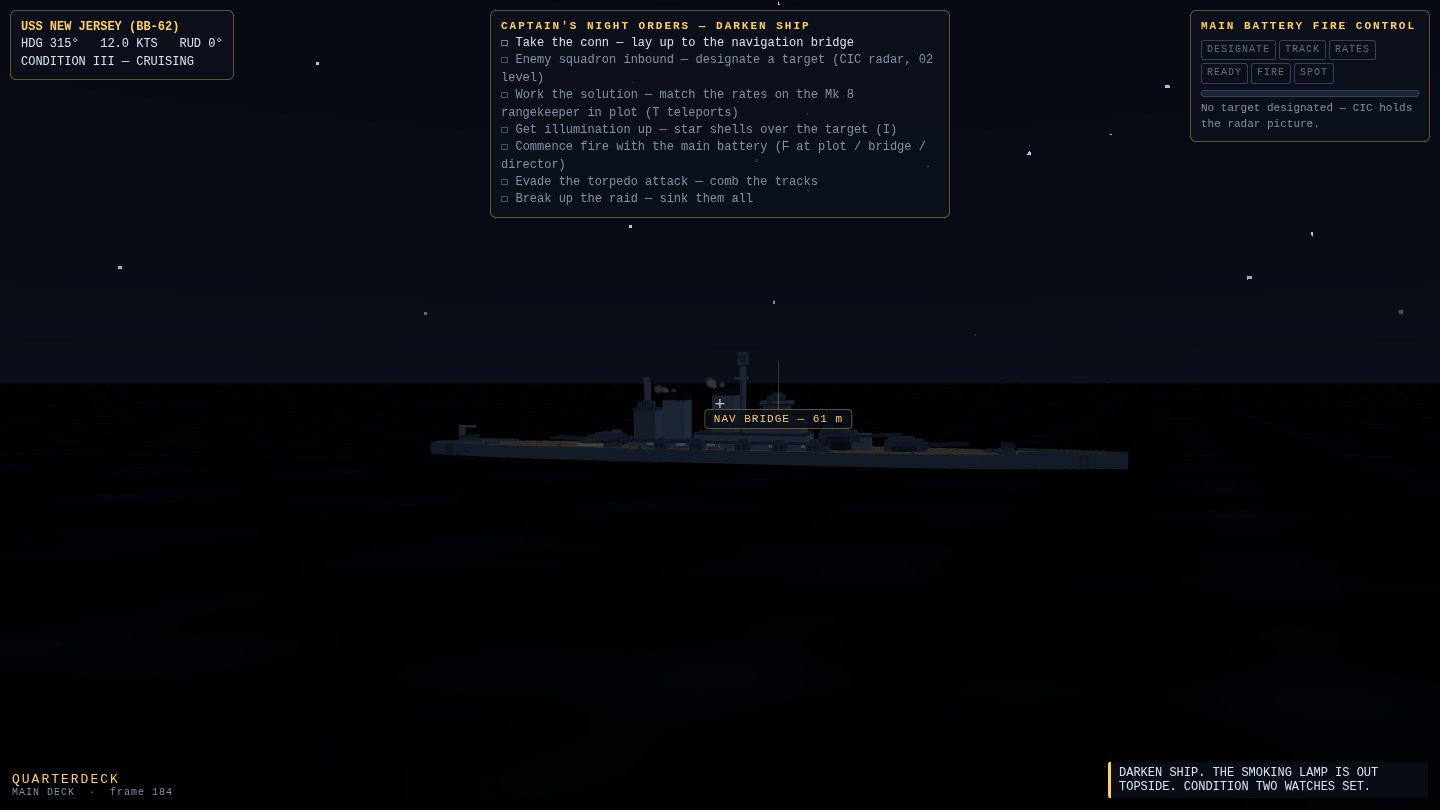
NIGHT ACTION douses the sun properly: the sky fades to a starfield, the sea goes black with hard moon-glints, and the darkened ship dims to a silhouette — only the scopes and the plotting board keep their glow, being instruments. The enemy is reduced to what 1944 actually gave you: radar pips and muzzle flashes on the horizon. The gunnery still works, but the division of labor sharpens. Radar ranging feeds the rangekeeper fine, while the director's eyes are blind — no optical designation, no rangefinder cuts, no manned-director edge — until you light the target up.
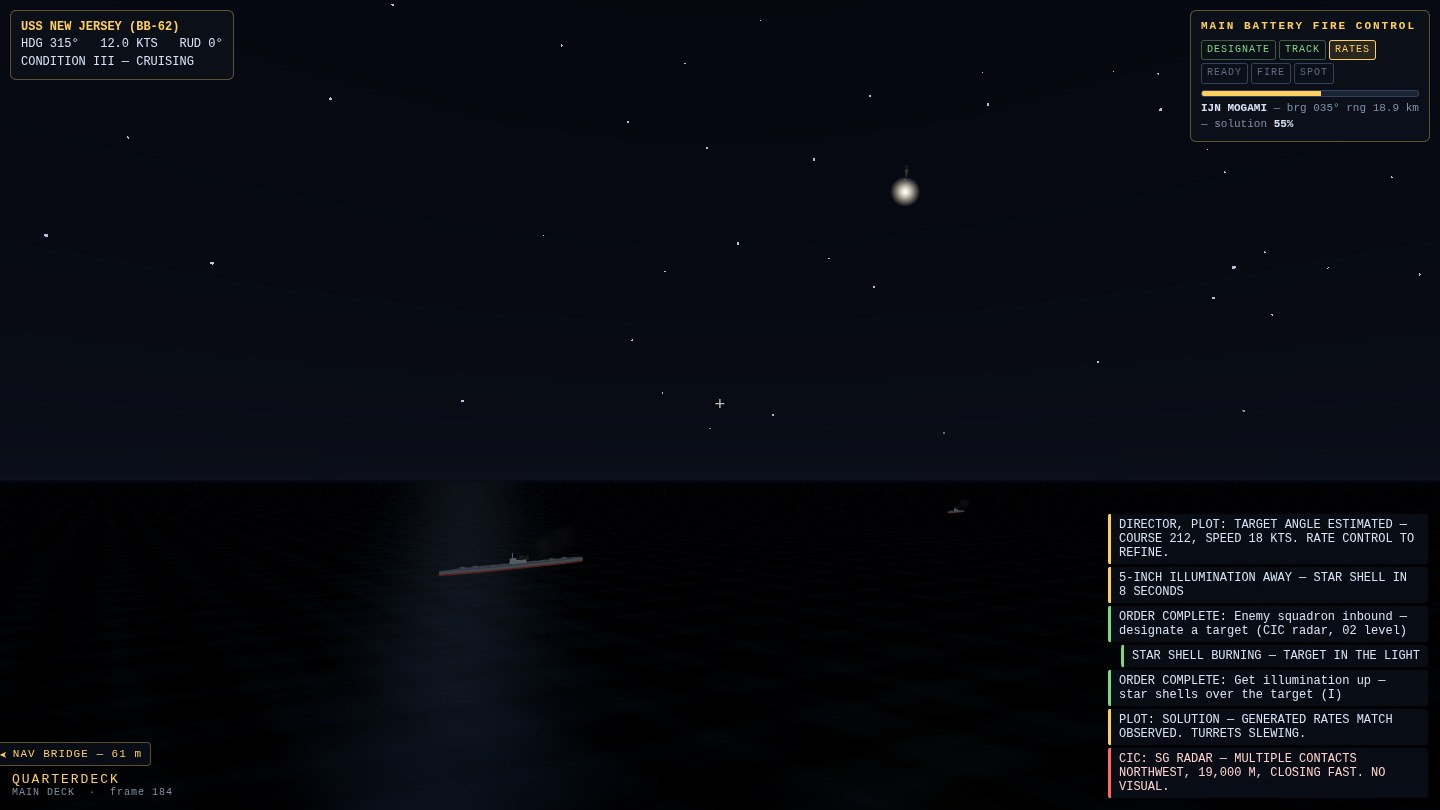
Burst beyond, silhouette the hull
I fires 5-inch star shell illumination, and it follows the doctrine exactly: the burst hangs several hundred meters past the designated target, so the flare glows behind it and the hull reads as a black cutout against the light. A pool of light spills across the water beneath it, and while a target stands in that light its silhouette brightens and the director wakes back up — designate, cut ranges, spot. Flares sink on their parachutes for about a minute, the light gutters as they near the water, and then the dark comes back. Keep them coming, or keep faith with the radar.
Torpedo water
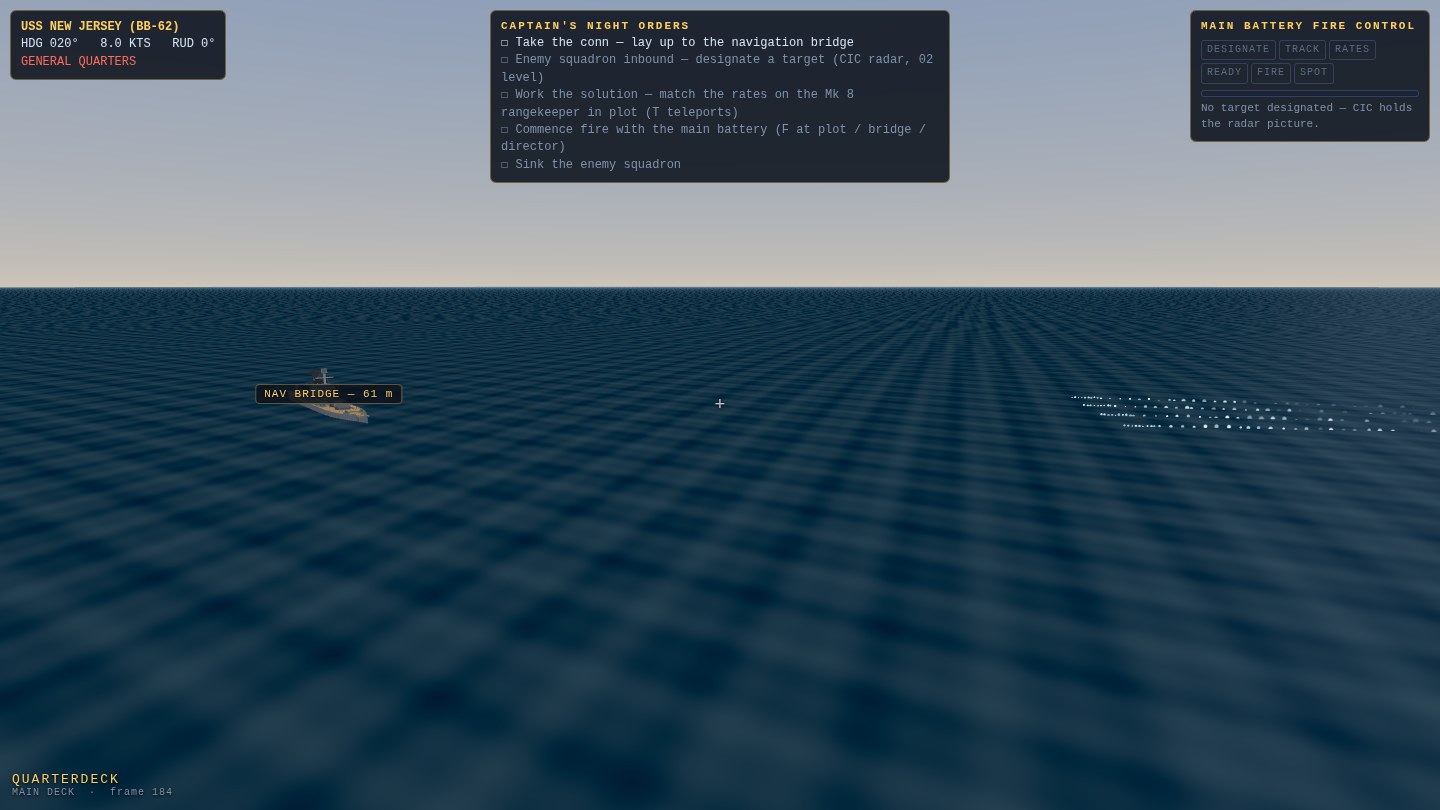
Destroyers now do the thing that made battleship captains sweat: inside about 7 km they turn broadside, put a four-fish Long Lance spread in the water at your predicted position, and haul clear. There's no launch flash to warn you — the first you'll know is the lookouts calling wakes inside 2,500 m ("TORPEDO WAKES STARBOARD BOW — COMB THE TRACKS!"), and then it's pure conning: turn into the spread so the tracks pass down your sides. The wakes are real churned-foam trails you can read from the bridge; at night they're the only thing you'll see. Take one anyway and the Iowas' deep torpedo defense system gets its say — sometimes it holds, whipped but dry; mostly it's major flooding in the two nearest compartments below the waterline and DC Central earning its keep. The day missions get the same treatment: the 1944 surface action's destroyers now launch too.
A crew with something to say
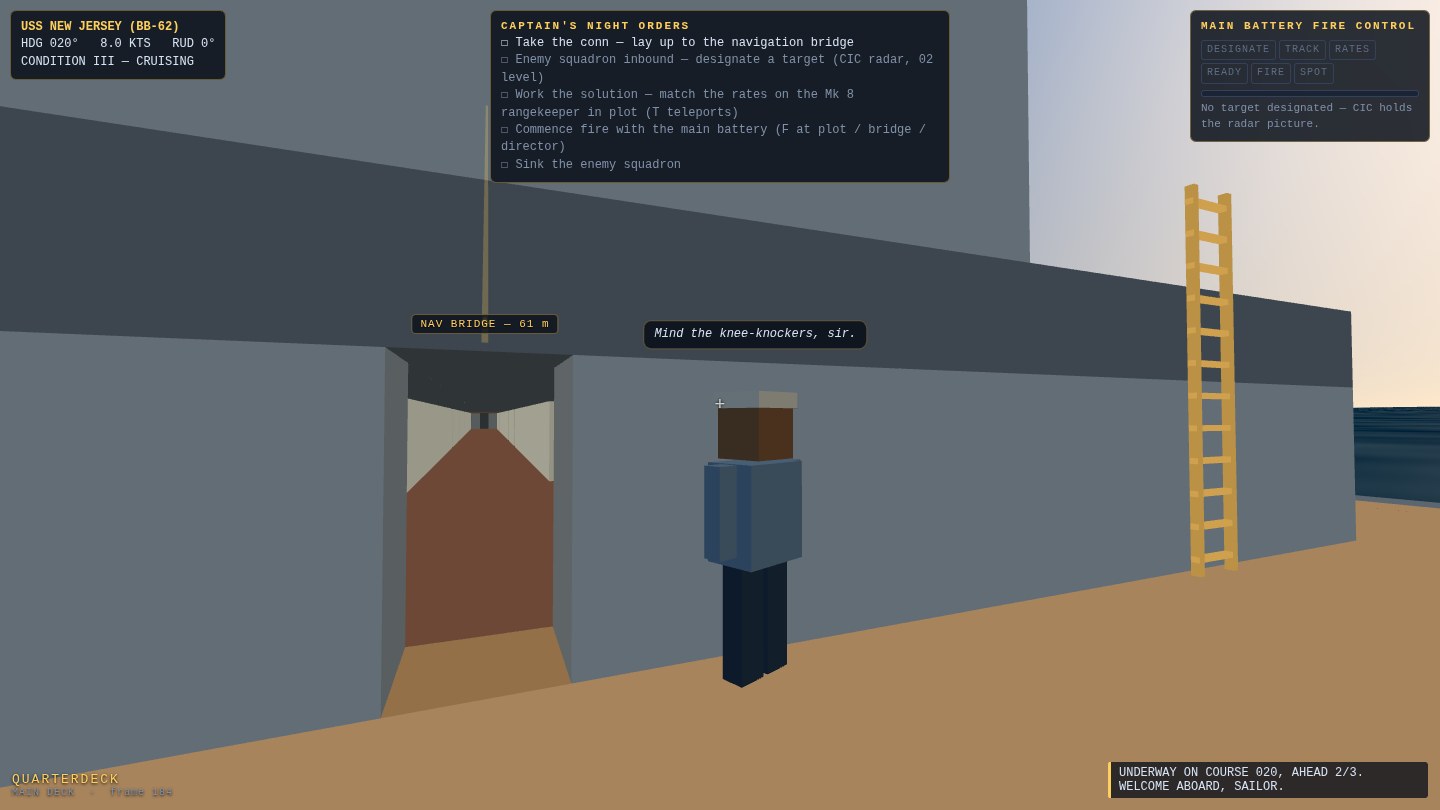
Walk near a sailor and a line appears over his head, the classic game way: text on top, a soft murmur underneath that suggests a voice without ever robot-reading one. It's mess-deck gossip, engine-room pride, night-action nerves — and genuinely useful pointers ("plot's begging for rates, sir — the rangekeeper's on the third deck"). What they say tracks where you are and how the fight is going, so the crew doubles as a hint system that never breaks character.
Between actions the 1MC runs the ship's day — sweepers, mail call, the smoking lamp, now-relieve-the-watch — and the announcements aren't set dressing: chow call sends the crew to the mess deck, and you can stand in the passageway and watch them file past.
The grade goes in your service record
Every mission now ends with a gunnery grade in the Navy's own idiom: gunnery (straddles and hits per salvo, 45 points), dispatch (time against the mission's par, 25), and ship's condition (what you let them do to her, 30). Eighty-five or better is the Battle Efficiency "E". Your best run for each mission is saved as the ship's record and shown on the banner — beat it and the banner says so. It's a small thing, but it turns "I finished Beirut" into "I finished Beirut clean, under par, without a round in the city," which is the actual game.
Five missions, a working rangekeeper, star shells, torpedo water, and a crew with opinions. Report aboard: warbirds.io/battleship — and set night quarters. The gold ladders glow in the dark, a little.