The island got a life
Warbirds has always had a beautiful island to fight over — but it was a stage set, not a place. This pass gives it a pulse: boats working the water, a lighthouse sweeping the coast, gulls and a whale — and airfields that finally feel lived-in.
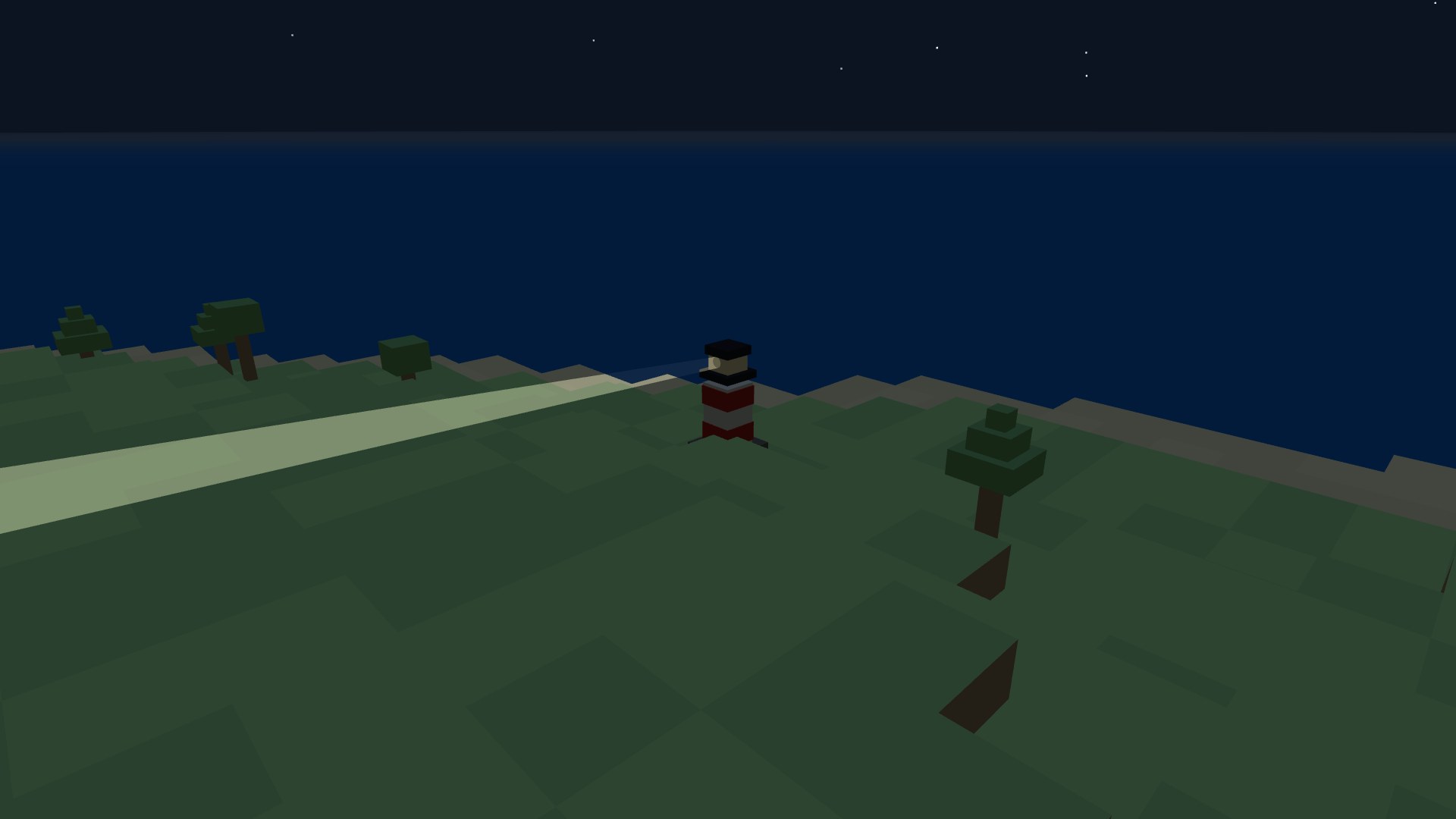
Nobody's watching, and that's the point
None of this shoots, scores, or gets in your way. Fishing boats putter neutral lanes in grey and white. A striped lighthouse on the highest coastal point turns its beam over the black water after dark. Gull flocks burst off the water when you skim the coast at speed, then settle again. And once in a rare while, a whale rolls through the waterline and blows a spout. The whole job is to make low, slow flying worth doing — to give you a reason to drop off the perch and go look at something.
Everyone sees the same sea
Here's the nice part. The whole fleet sees the same boat in the same place at the same instant. When the whale rolls up and blows its spout, it isn't a lucky local fluke — it happens for everyone at once, so it's a shared “did you see that?!” moment over the wing. The only things that are yours alone are the gulls bursting off the water and the ground crew scattering: those react to you, right where you are, and it doesn't matter if your gulls flush a half-second before your wingman's.
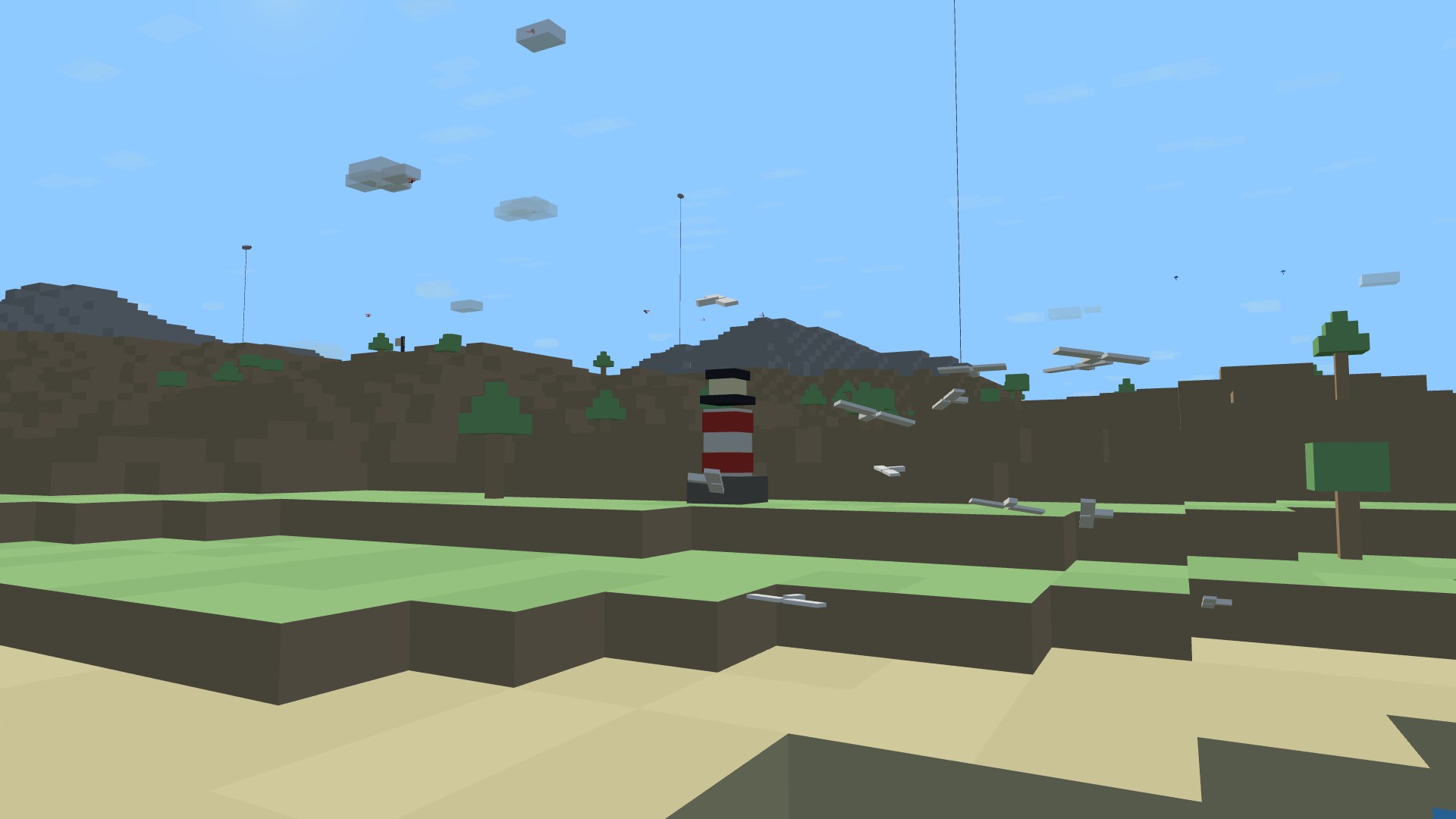
Your home field, lived-in
The same pass reaches the airbases. Each one is now a proper graded apron with a marked runway and a couple of hangars — a level deck that reads as an airfield whether the base sits on a hillside or, for a waterfront corner, out over the shallows. Buzz your own strip and the ground crew bolt for cover, arms up, then wander back once the scare passes. A windsock at each base streams the round's actual wind — the same wind that's been drifting your bombs all along, now readable at a glance on short final. The control tower's glass cab lights up warm at dusk with a slow red beacon blinking on top. Little touches, but they turn three ramps and a flag into somewhere people actually work.
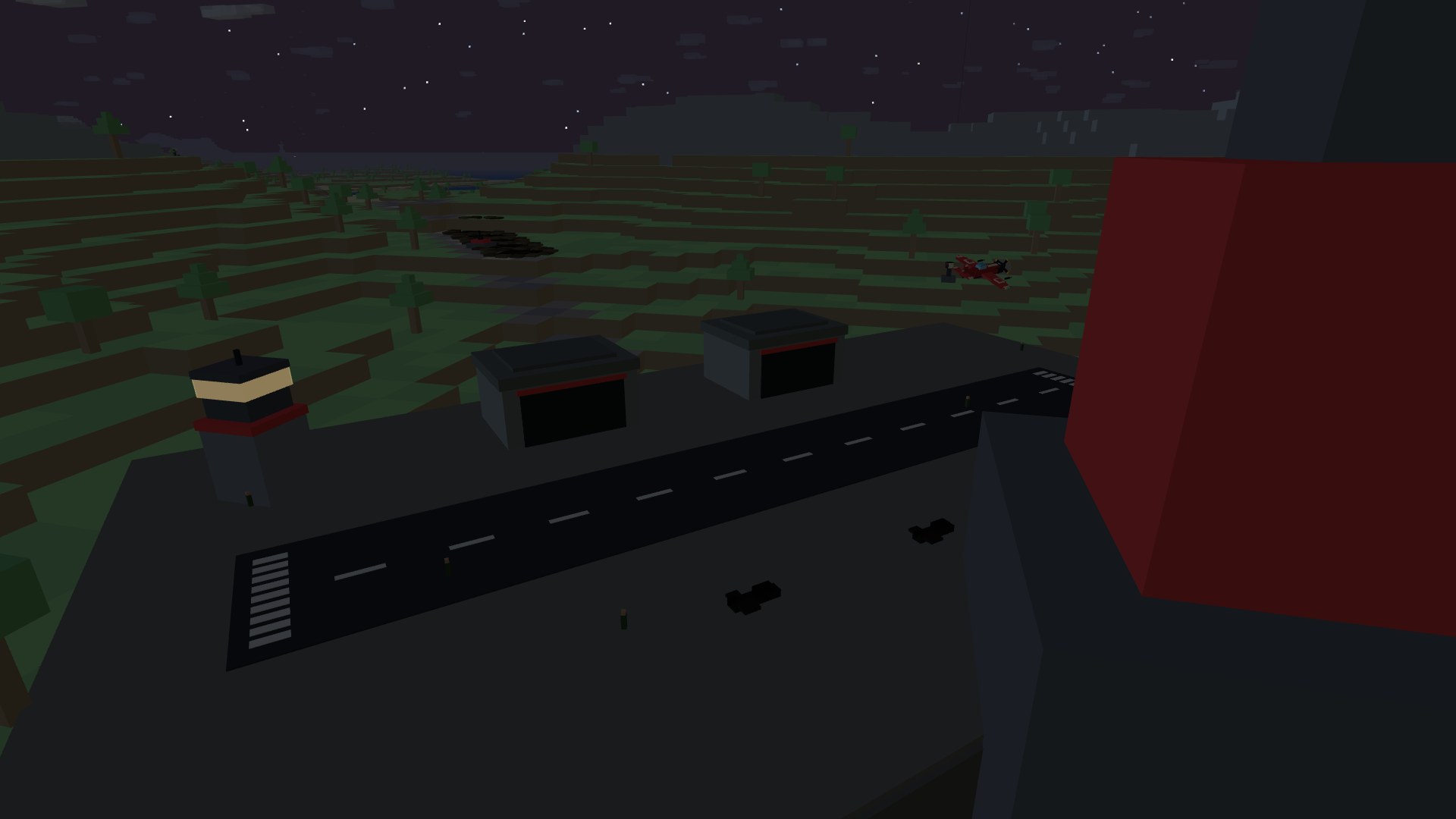
The one thing that isn't just for show
There's a single exception to “none of it fights,” and it's a deliberate one: every base parks a row of non-flyable reserve aircraft off the strip. They don't fly and they can't shoot — but they burn for points. That makes the enemy flightline a real target and gives you a reason to do the scariest thing in the game: a low, straight, slow pass right through their flak ring. Like the flak nests and radar stations, they take damage, pay out points, and respawn on a timer. The row shows real variety — a mix of plane types drawn exactly like your own fighter, sitting on their wheels until someone shoots one into a charred hulk.
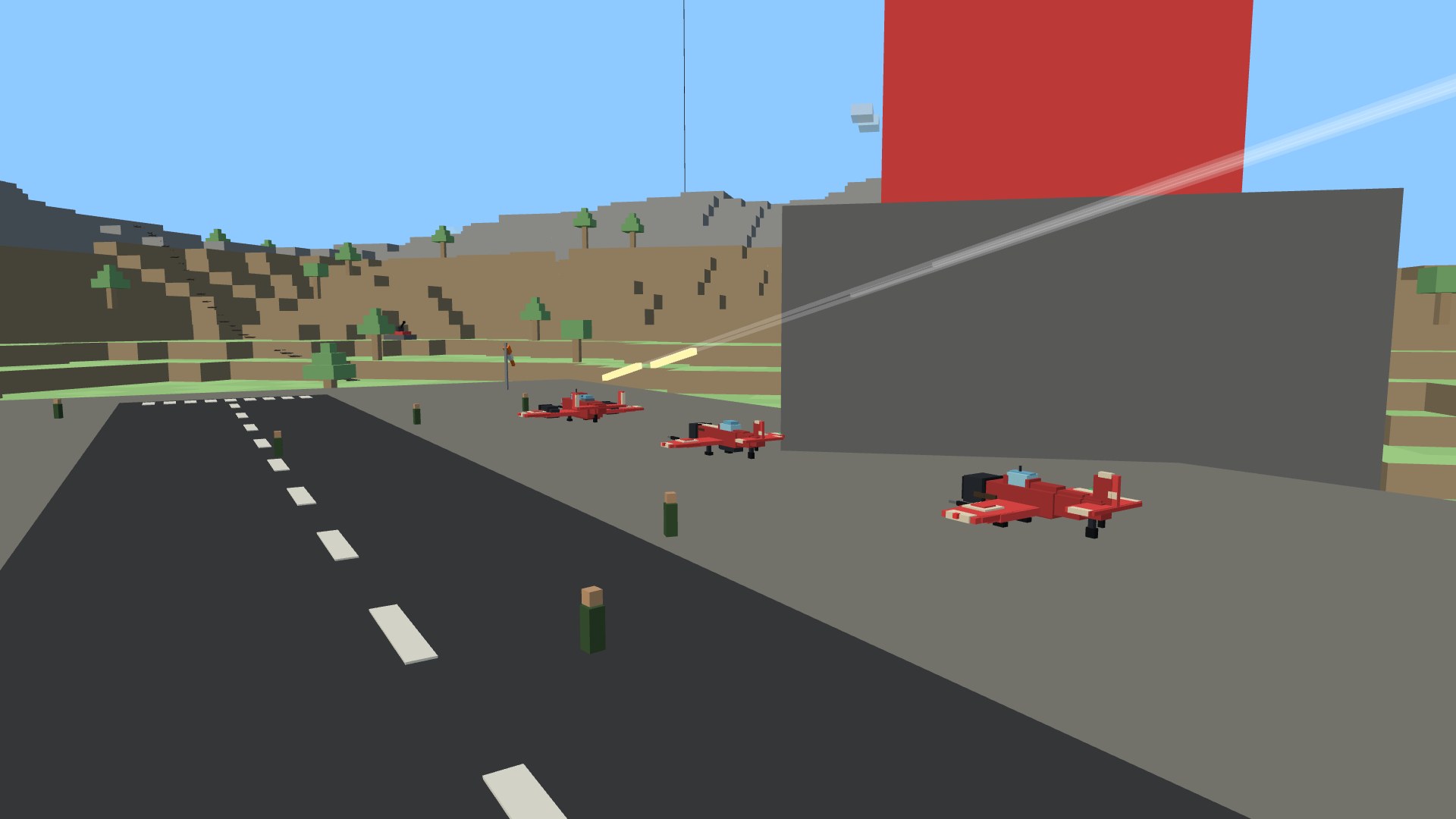
A stage set became a place. The war is still the main event — but now there's a whole quiet island going about its business underneath it, and every so often it's worth dropping down to fly through.