The map remembers the round
Planes fall, pilots bail, survivors get fished out of the sea — and now the ground keeps the receipts. Craters, burning crash sites, and oil slicks all stick around for the whole round, so the front line reads like a story of everything that happened on it.
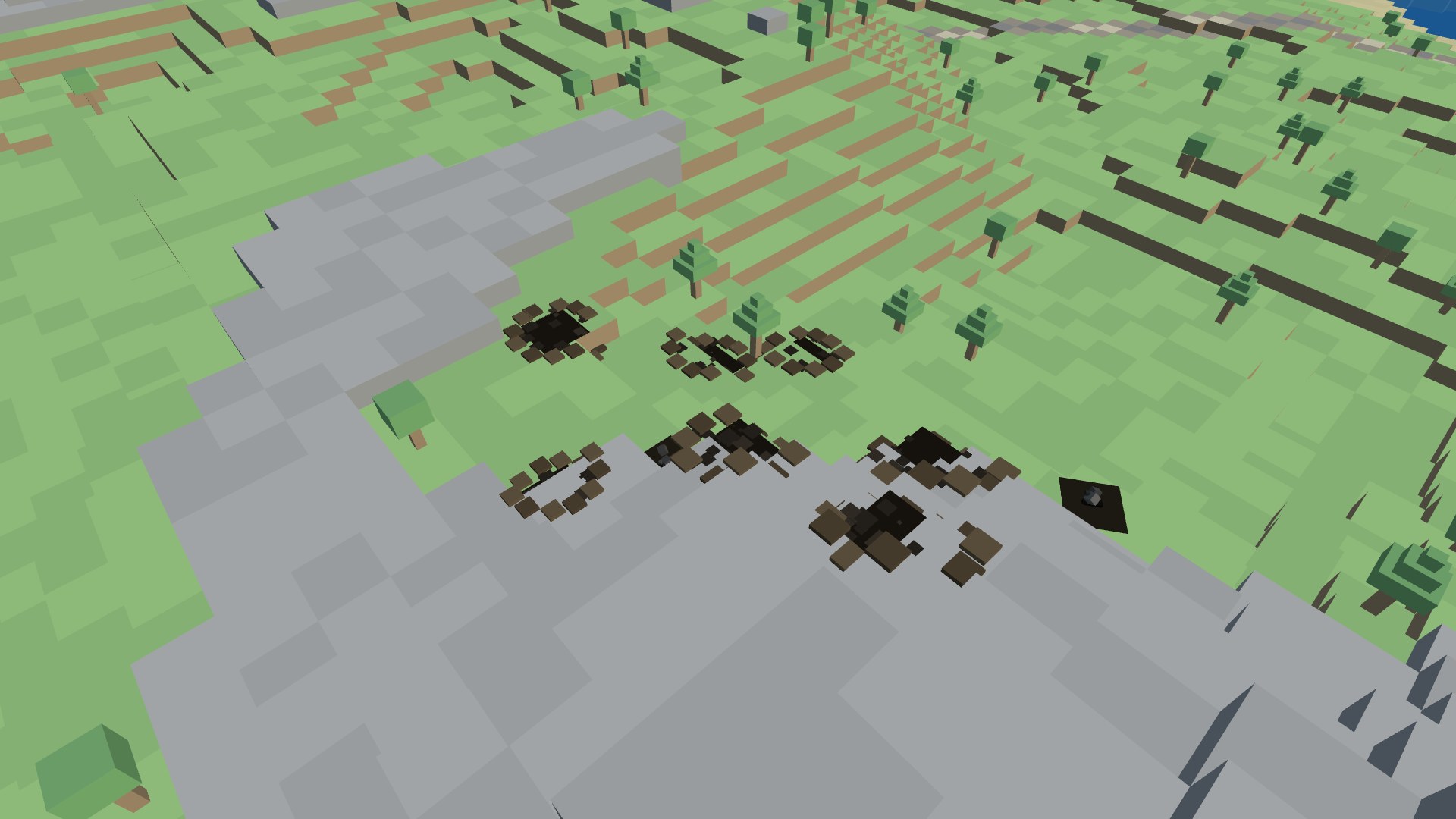
Three kinds of scar
A bomb that lands on dry ground leaves a crater — a dark scorched bowl ringed with raised dirt, sized off the blast. A plane that goes in on land (whether it flew into a hill or corkscrewed down as a wreck) leaves a burning crash site: a charred skeleton with a smoke column that keeps going the rest of the round. And a hull that sinks leaves an oil slick spreading on the sea. They pile up as the round goes, so by the bell the map is a record of where the fighting was heaviest.
Marks, not holes
A crater is a scorch mark, not a pit — the ground under it is exactly the ground you always flew and drove over. Nothing you can fall into, nothing that turns into new cover, nothing that changes a sightline. The scars are there to be read, not fought over: they tell you at a glance where the round has been ugliest, so a ridge stitched with craters and smoke columns is a place you already know to be careful.
The round's memory, wiped each round
Join late and you see the whole story already written into the ground the moment you spawn — the craters, the smoking wrecks, the slicks. It all builds through the twenty minutes and then wipes clean when the next round starts, so one round's carnage never bleeds into the next. Every match gets a fresh, unmarked steppe (or sea) to ruin all over again.
With this the drama pass has closed its loop on death: the plane falls and burns, the pilot bails or gets fished out of the sea, and the crash site smoulders on the map behind them. Every kill now has a beginning, a middle, and an end you can still see minutes later.