Where the round actually landed
The report was one line: “anecdotally, I only ever see wings fall off.” Warbirds tracks damage all over the airframe — engines, wings, fuel, tail — so that shouldn’t be possible. Turns out it was, and now it isn’t.
Every kill looked the same
Two things were hiding the damage model. The death animation always sheared the same wing off for drama, so every kill ended with a wing coming away no matter where you’d actually shot the plane. And underneath it, hits scattered more or less at random — the angle you attacked from barely changed what broke. You could hammer a plane from dead six and still watch it lose a wing it should never have lost. The wreckage never told the truth about your gunnery.
Your shots land where you aim
Now the round’s actual path through the enemy decides what it hits. Connect, and it’s traced through the plane’s real parts — engine, canopy, fuel tanks, each wing, and a new one: the tail. The first thing the round runs into is the thing it breaks, and it’s the same part you see take the scorch and the bullet holes, so what breaks is what you were looking at.
The angle you fly finally matters. A dead-six chase saws the tail off and can’t reach the engine at all — the whole fuselage shadows it, which is exactly why real fighters carried armor plate behind the pilot’s seat. A head-on merge gambles the nose and the canopy. Plunging deflection fire is the wing-taker. Fly the aspect, earn the failure mode.
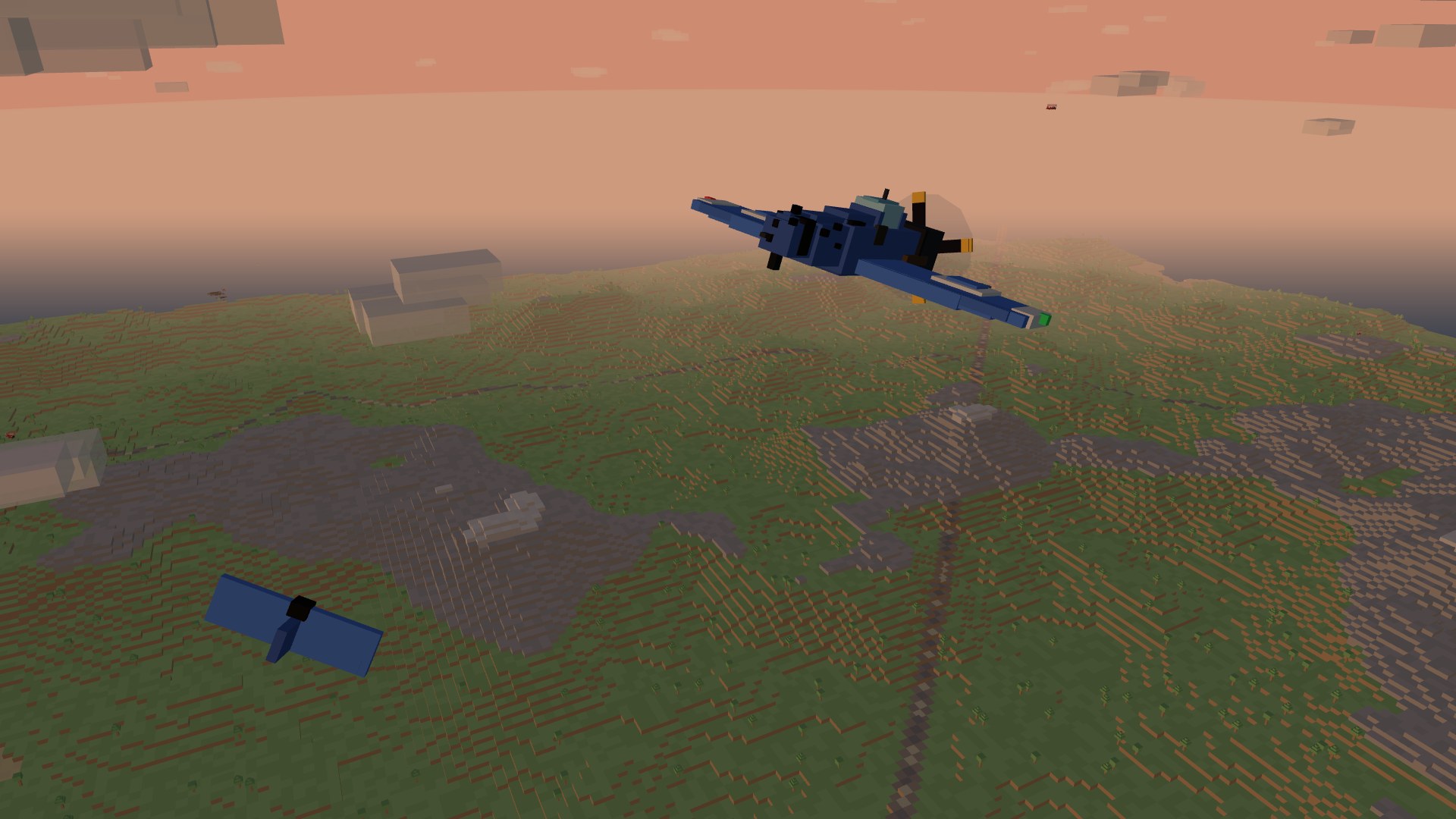
The tail comes off now
The tail is a real part of the plane now: chew it up and the elevators and rudder go mushy together until there’s almost nothing left — the plane still weathervanes, you just can’t argue with it. Saw clean through and the whole tail cross tears away, the nose falls through, and the wreck tumbles flat instead of corkscrewing. And the way a plane dies now matches the way you killed it: shred the tail and the tail comes off, not some wing the animation picked for you. Your kills finally look like your gunnery.
No gauge for it
Deliberately, none of this adds a gauge. A dead engine now windmills the prop down and drops the drone to an idle mutter at any throttle setting (a dying jet’s flame shrinks the same way); a shot-away tail is a stick that stops answering; a shredded wing is a roll you have to hold against. The airframe is the instrument panel — if you can’t feel it, it didn’t matter.