A moon to fly by
Last week the sun came up round. That left one crate hanging in the sky — a big pale box with two darker slabs for seas, full every night, staring down at the island like a road sign. Tonight the real moon rises.
The face you know
Look up on a clear night and you'll know the moon at once. The dark seas are where they should be: the Sea of Rains up to the left, Tranquillity to the right of centre, the round Sea of Crises alone by the edge, the great Ocean of Storms spilling down the left side. Bright young craters splash across the pale highlands — Tycho low in the south with its rays thrown half across the face, Copernicus and Kepler out in the Ocean, and Aristarchus, the brightest spot on the whole moon.
It hangs about the same size in the sky as the old crate did, a good bit bigger than the real one looks, so you can make out its face from the cockpit without squinting.
It waxes and wanes
The moon has phases now. Over an evening's play it swells to full and shrinks back to a fat gibbous and swells again, and every pilot in the sky sees the same moon on the same night. Waxing, the bright edge is on one side; waning, it's on the other. The dark side still blots out the stars behind it, with a faint glow of earthshine across it.
A full moon is bright right out to its rim, the way the real one is — a flat silver coin, not a shaded ball.
Moonrise
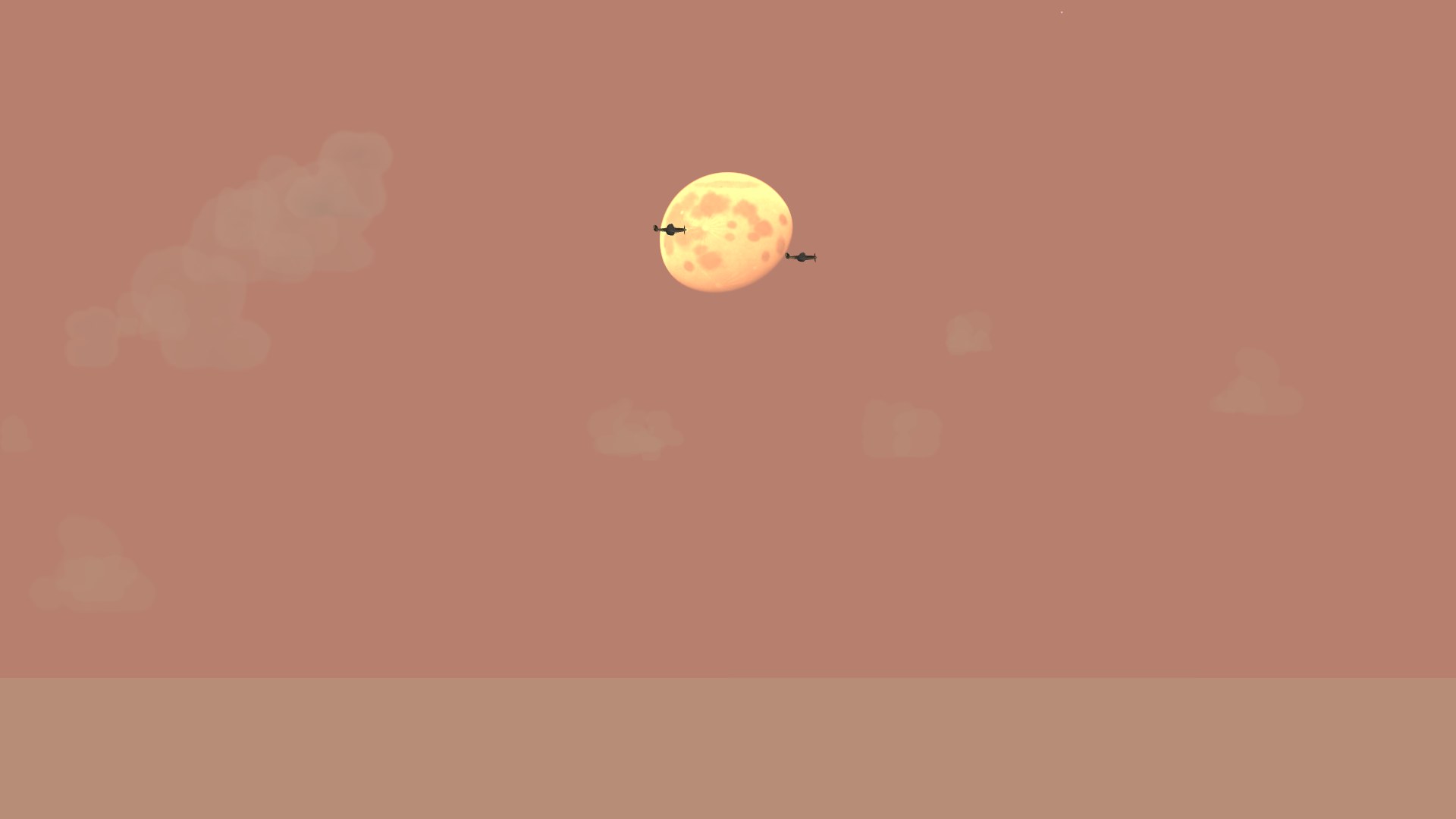
Just after sunset, look away from the afterglow. The moon comes up out of the haze on the far side of the sky, honey-orange and fat on the horizon, and pales to silver as it climbs. It rises behind the ridges and sets into the sea like the sun does.
A sky full of stars
The old night sky was two thousand identical white dots. The new one looks like the real thing:
- **A few bright, thousands faint.** A handful of stars blaze, a few dozen are easy to pick out, and behind them the sky is dusted with faint ones.
- **Colours.** Blue-white, white, gold like our sun, orange, and the odd red giant, all pale the way starlight is.
- **They come out in order.** At dusk the brightest ones show through the afterglow first, and the rest fill in as the sky darkens. A bright moon washes out the faintest, and a storm hides nearly all of them.
- **They twinkle,** hardest down near the horizon, where their light crosses the most air.
- **The sky turns.** The whole dome wheels once a day round a pole star that hangs still, low in the north. Stars rise where the sun rises and set where it sets.
The Milky Way
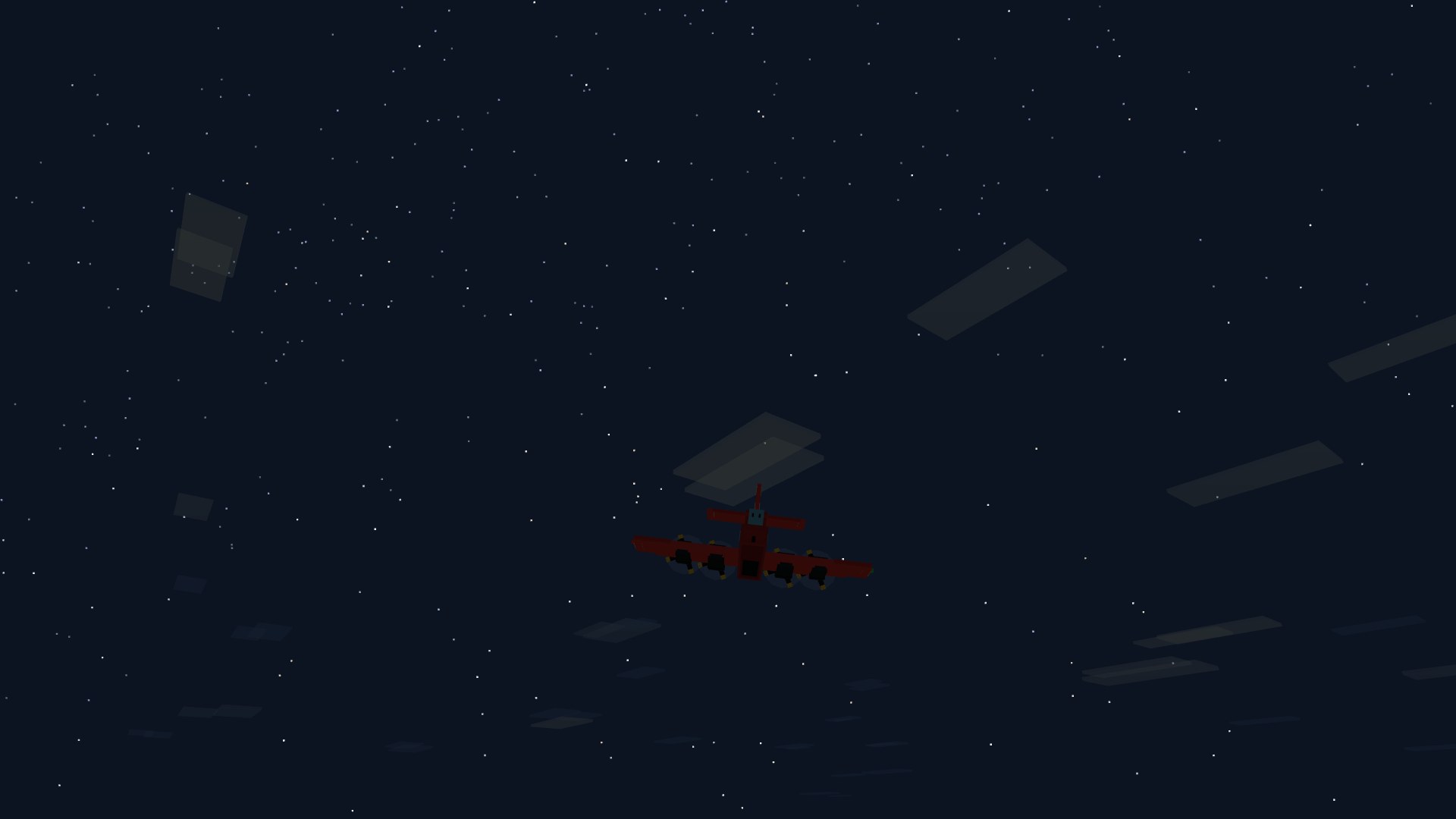
On a dark, moonless, clear night, look for the Milky Way arched across the sky: a soft river of light, brighter in some stretches and dimmer in others, with a dark lane of dust running down it and faint stars crowded along it. A bright moon dims it and an overcast hides it, so the best nights to see it are the rare ones.
Same moon everywhere
The moon and the stars are the same over the Brick Sea and the Brick Steppe as over the island. A destroyer captain on the night watch can pick out the pole star off the bow, and a tank commander can watch the moon clear the treeline before the next push.