The diorama gets its shadows
Switch on High-fidelity graphics and the world used to look a little like a painted cut-out: every wall in shade was the same flat tone, and nothing got darker for being tucked into a corner. Today the light has depth: shade where things meet, a sky that lights each side differently, and a sheen on everything painted.
Shade where things meet
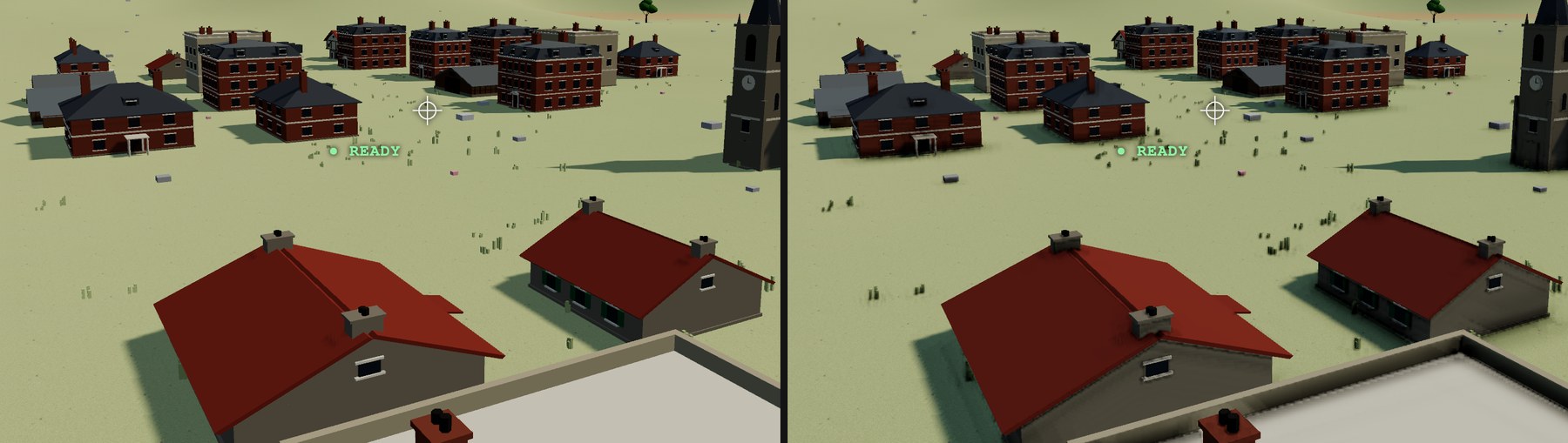
Look at any corner on the field: where a wall meets the street, where a roof meets its parapet, under a house's eaves, between the canopies of a wood. Each one now goes softly dusky, the way the real world does wherever the open sky can't quite reach. Open ground stays exactly as bright as it was.
It's the small things that change most. Every tuft of grass on the Brick Steppe sits on the ground instead of floating over it. A Paladin parked by a cottage looks like it's really there. The streets of the market town read as streets, walled in by the rows of roofs either side.
The sky lights the world
The shade side of everything used to get one flat fill of sky. Now the sky you see is the light you get. The half of the sky round the sun is bright and warm, the far side a deeper blue, the horizon a pale glowing band, and the ground bounces its own colour back up from below.
So a house in shade is three tones now, not two: the wall facing the sun's side of the sky is warmer and brighter than the one facing away. The underside of a wing over the meadows picks up a green glow from the fields; over the Brick Sea it's darker and bluer. Hills on the sun's side of the valley catch more light than the far slopes, and the island's ridges stand up from the haze.
A sheen on painted metal
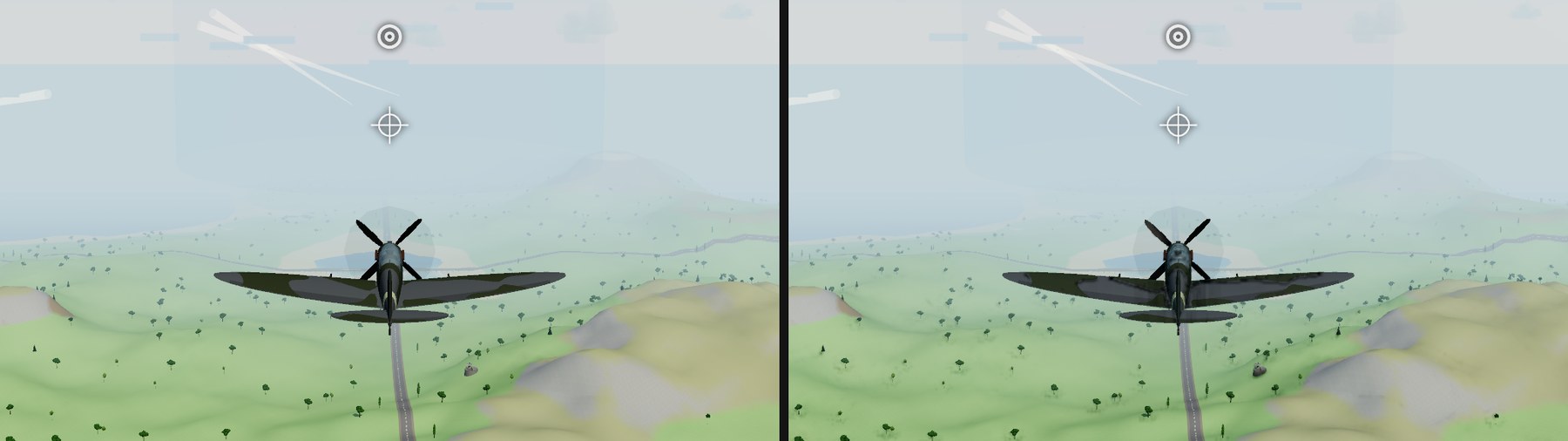
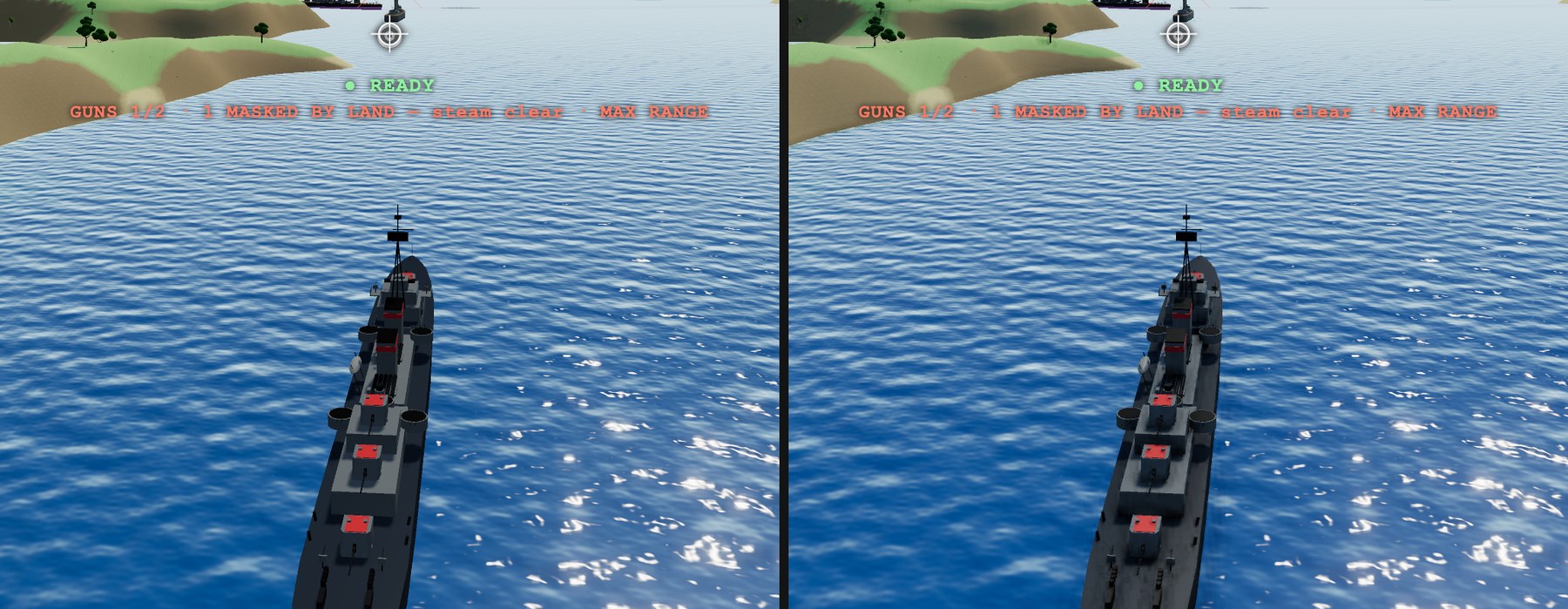
Airframes, tanks and warships now catch the sun. Roll a Spitfire past the sun and the highlight slides along the wing, showing its curve from root to tip. A destroyer's flank picks up a rim of sky against the sea. Paint stays paint, though: the camouflage keeps its colours even when you fly straight into the glare. The woods and towns get only a whisper of it, and the ground none at all.

Where to find it
It's all part of High-fidelity graphics (Settings), on desktops in every theater. It's light on the frame, too: on a modern laptop at full Retina resolution the game still holds a steady 120 frames a second over the island and on the steppe. Phones, tablets and the classic look are unchanged.
See you over the diorama.