The Early Jets era: the same war, fifteen years later
Warbirds has always let you pick your theater — air, naval, land, or the combined-arms Brick Gulf. Now you can pick your era too. The Early Jets Gulf keeps the same gulf, the same fleets, the same tanks — and hands the sky to the early jet age: the Starfang as a starter instead of a trophy, a delta-winged Balalaika, a four-railed Rhino, and an Arclight hauling a city block of bombs — plus the era's signature pair: tail-chasing heat-seekers that miss like it's 1965, and the flares that trick them.
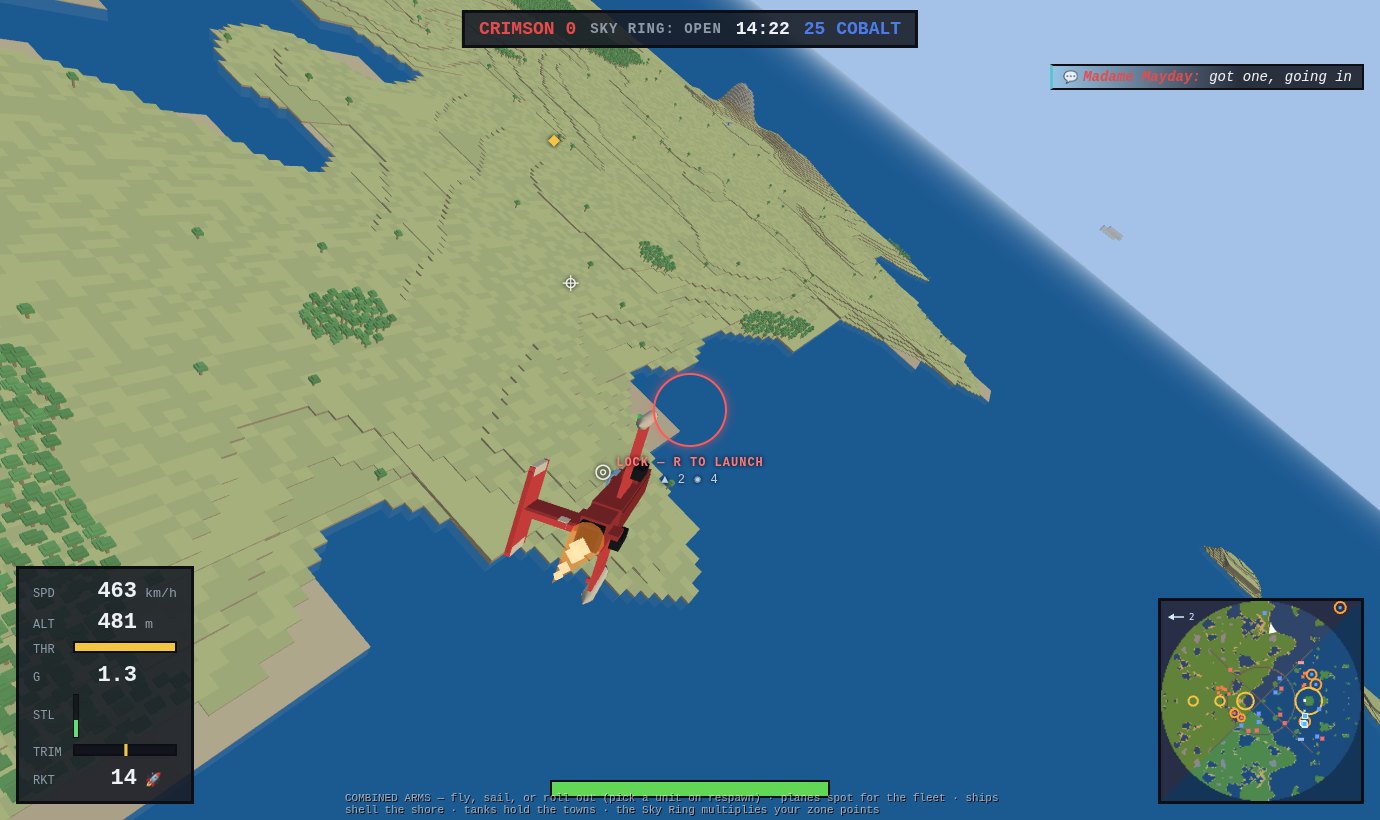
The same war, fifteen years on
Nothing about the Gulf changes but the hangar. The Crimson and Cobalt fleets still trade broadsides, the tanks still fight for the shore, the objectives are the same — you just come to them at twice the speed, trailing afterburner, with a missile on the rail. The classic propeller game is untouched and still there whenever you want it; the jet age is a second way to fly the same beloved map.
Missiles that miss, on purpose
These are the first-generation heat-seekers, and they are gloriously unreliable — which is the whole point, because every way they fail is a way you can beat them. The seeker only locks from behind, staring up a hot tailpipe; get anywhere but a bandit's six and there's nothing to grab. In flight the missile turns lazily, so a jet that breaks hard and low simply out-turns it and slides out of the seeker's view. Some rounds just fumble off the rail and never guide at all. And a flare punched at the right moment gets one honest chance to steal the seeker for good.
So the missile is your reach, not your guarantee. Wind up the lock, hold the growl, take the shot — but expect to close and finish with guns as often as not. When a heat-seeker does connect, you earned the setup.
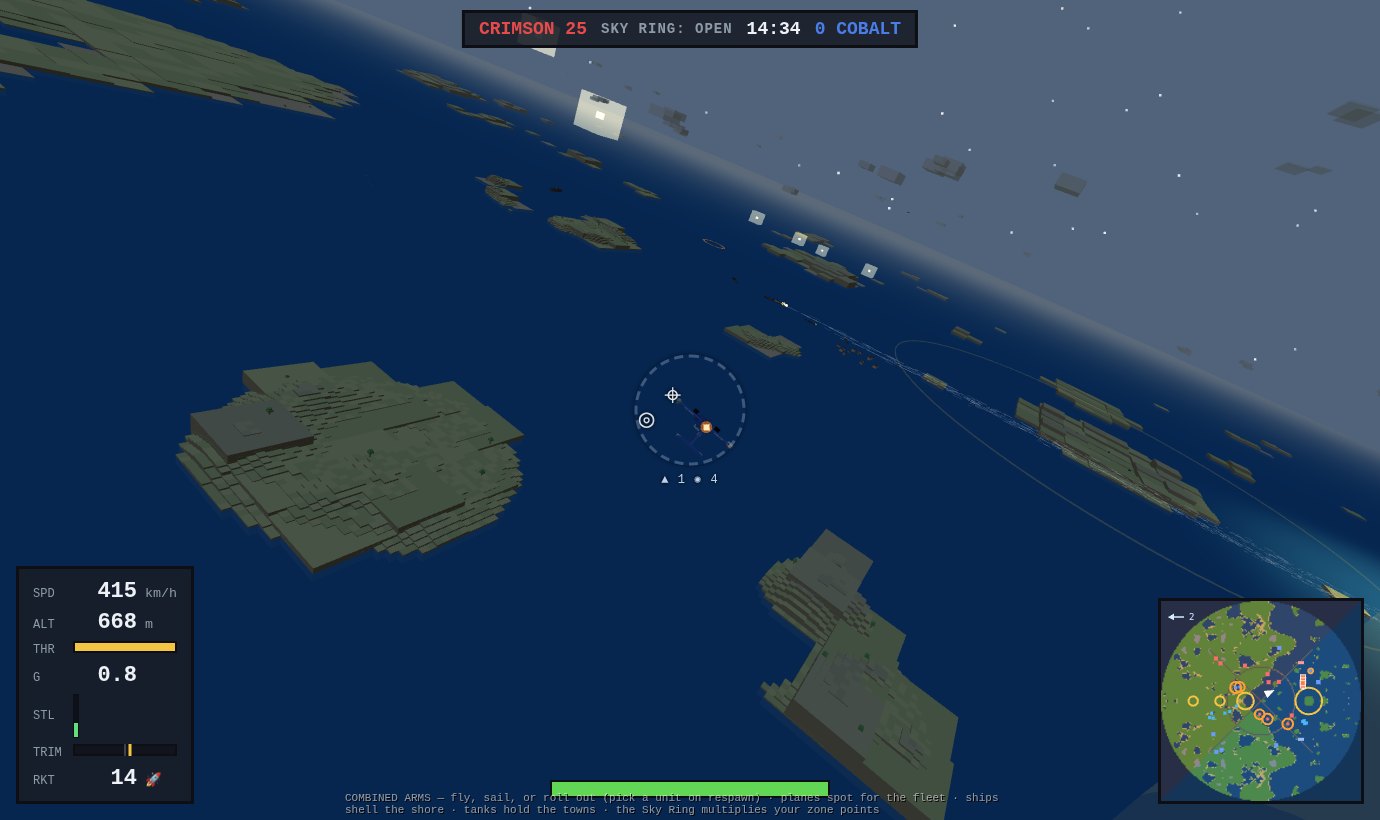
Flares that lie to the seeker
With a missile in your mirrors, the counter is loud and physical: haul the jet into a hard, low break to make the seeker chase a turn it can't follow, and dump flares to give it a brighter, dumber thing to chase. Do both and you'll usually watch the round sail off into an empty patch of sky. Miss the timing and it's on you. The break still beats the missile — exactly like 1965.
The rest of the war, aged fifteen years
The tanks and warships fight on as they always have — the steppe's missile-age gunnery and the fleet's gun line both read as timeless here, so they carry straight over. What changes is the tempo overhead: jets cross the flak envelope in a third of the time, but they arrive fast and straight, which is exactly what the ships' gunners love. The surface guns are still the deadliest thing in the sky, same as the propeller war — respect the flak or feed it.
Fly it: join an Early Jets Gulf, wind up a lock, press R to launch and L when the wingman screams incoming. The ring burns red, the growl goes steady, and the break still beats the missile.