The sea shows your misses — gun splashes on the water
Until now a burst that missed over the sea simply vanished. Your tracers went down toward the water and that was the last you heard of them. Not any more: the sea answers every round.
Walk it onto the deck
Roll in on a freighter steaming its sea lane, open up a little early, and watch the water. A ragged line of white spouts jumps up short of her quarter and races toward the hull as your nose comes up — the fresh ones climbing, the older ones collapsing back into spray behind them. That line is your fall of shot. If it's falling short, pull a hair. If it's crossing her bow, ease the rudder. When the spouts stop and the sparks start, you're on.
It's the oldest picture in the gun-camera reels, and now it's how you aim.
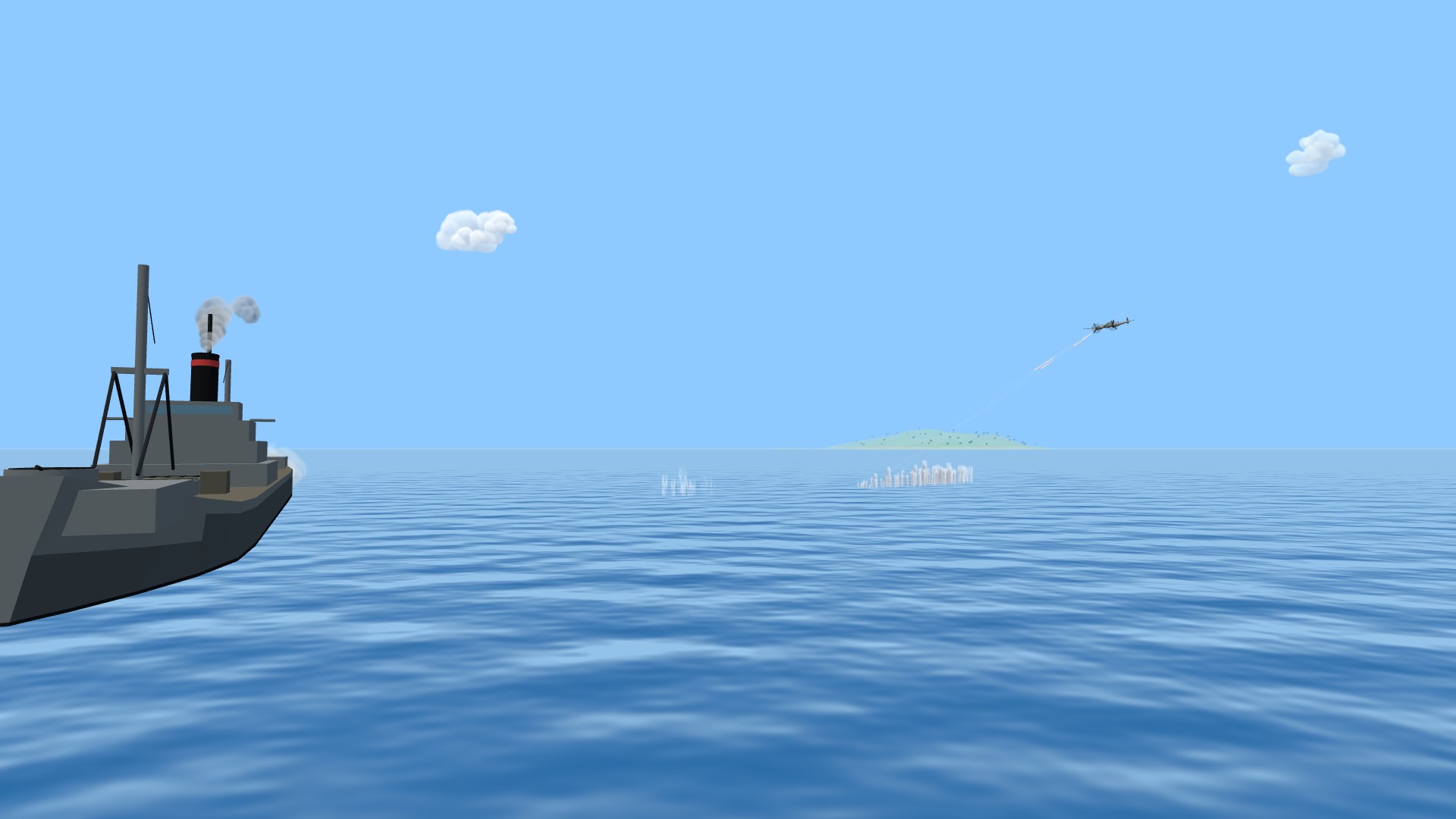
Every gun has its own splash
The spout grows with the round. A Spitfire's .303s flick up quick white threads; a Mustang's .50s stand a little taller; a 20 mm cannon round throws a proper jet with a second, smaller one bursting up beside it. Fly a mixed battery and you can read both guns in the water at once — the rifle-caliber patter and the fat cannon spouts mixed through it.
It works from the other side too. On the bridge of a destroyer, the Bofors fire your gunners hose at a strafer down on the wave-tops throws columns around him when it misses — so you can see whether your flak is chasing him or leading him. And on the Brick Steppe, a Bradley's 25 mm or a quad-20 half-track firing across a valley lake stitches its misses into the water in plain view.
Only the water
A round has to come down on open sea or a lake to throw one. The beach takes rounds without a spout, a round that finds a plane is spent on the plane, and fire far off on the horizon goes in quietly rather than filling the sea with specks. Close in, where you're fighting, every burst writes on the water.
Go take a low pass over the Brick Sea and watch where your rounds land.