The whole war, rebuilt
For its whole life, Warbirds has fought its war in boxes: a fighter was a stack of blocks, a carrier was a slab, a tank was a brick with a stick on top. You knew what they were, and they were charming, but you had to take our word for it. Today every one of them is a proper model — from the Spitfire on the flightline to the church steeple in the town square — still blocky at heart, but built like the real thing.
Your aircraft, for real
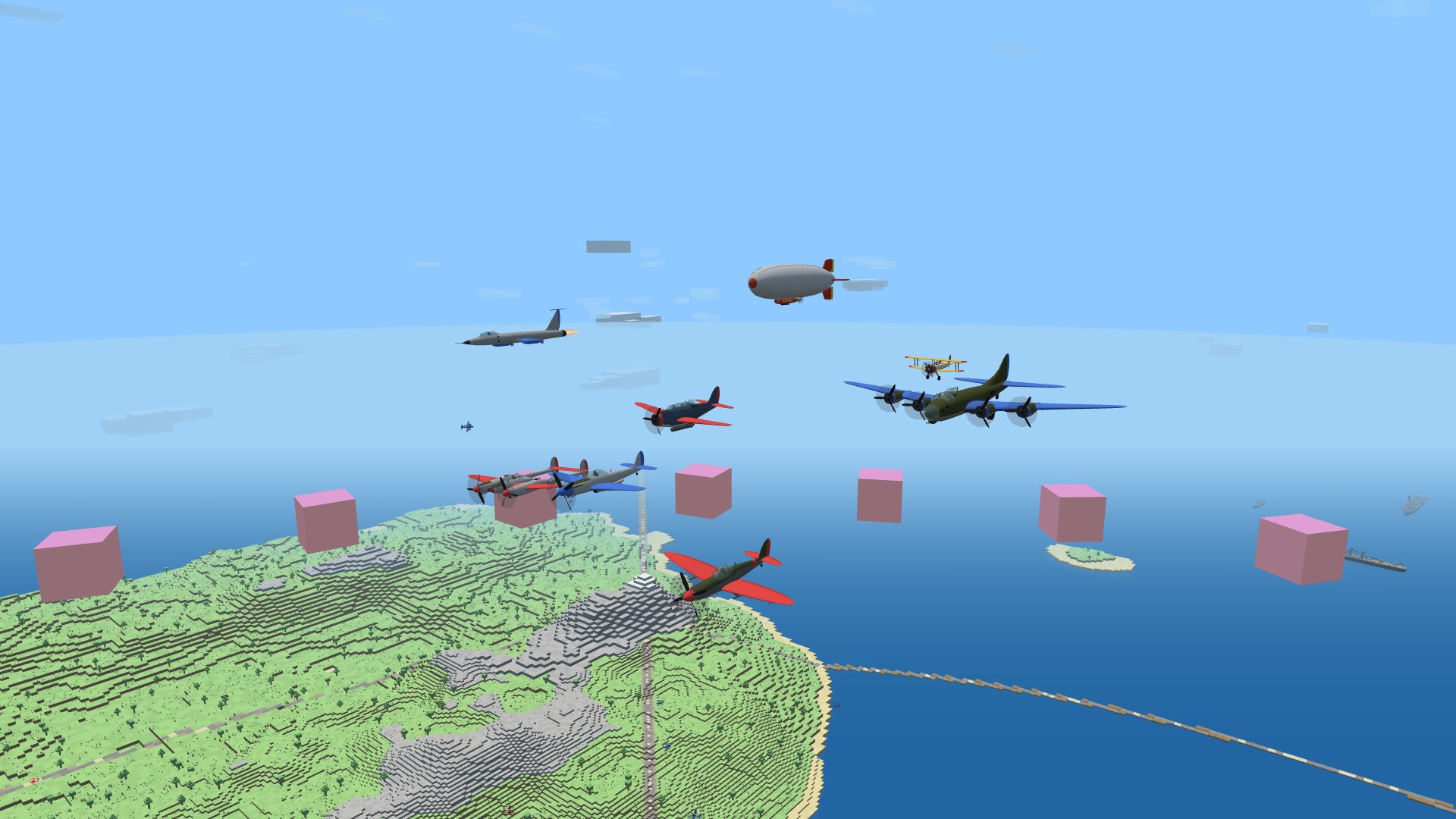
Every class you fly is now the airframe it was always meant to be. The Sparrowhawk is a Spitfire, the Thunderhead a P-51D Mustang, the Ironclad a twin-boom P-38 Lightning, the Leviathan a B-17 Flying Fortress, the Swordfin a TBF Avenger with a torpedo slung underneath, and the Starfang an F-104 Starfighter. When the jet age rolls in, the Starfang is joined by the MiG-21 Balalaika, the F-4 Phantom Rhino and the B-52 Arclight. The Skywriter is a proper biplane and the Marquee a proper blimp.
Your team flies its colours where you'll see them: Crimson and Cobalt now paint the wings and tailplanes, not just the roundels, so friend and foe read at a glance across a furball.
The Fortress's gunners sit in real turrets. The tail gun and the top turret swing and lift wherever you aim them, and on the B-52 the quad tail stinger does the same.
Damage you can read
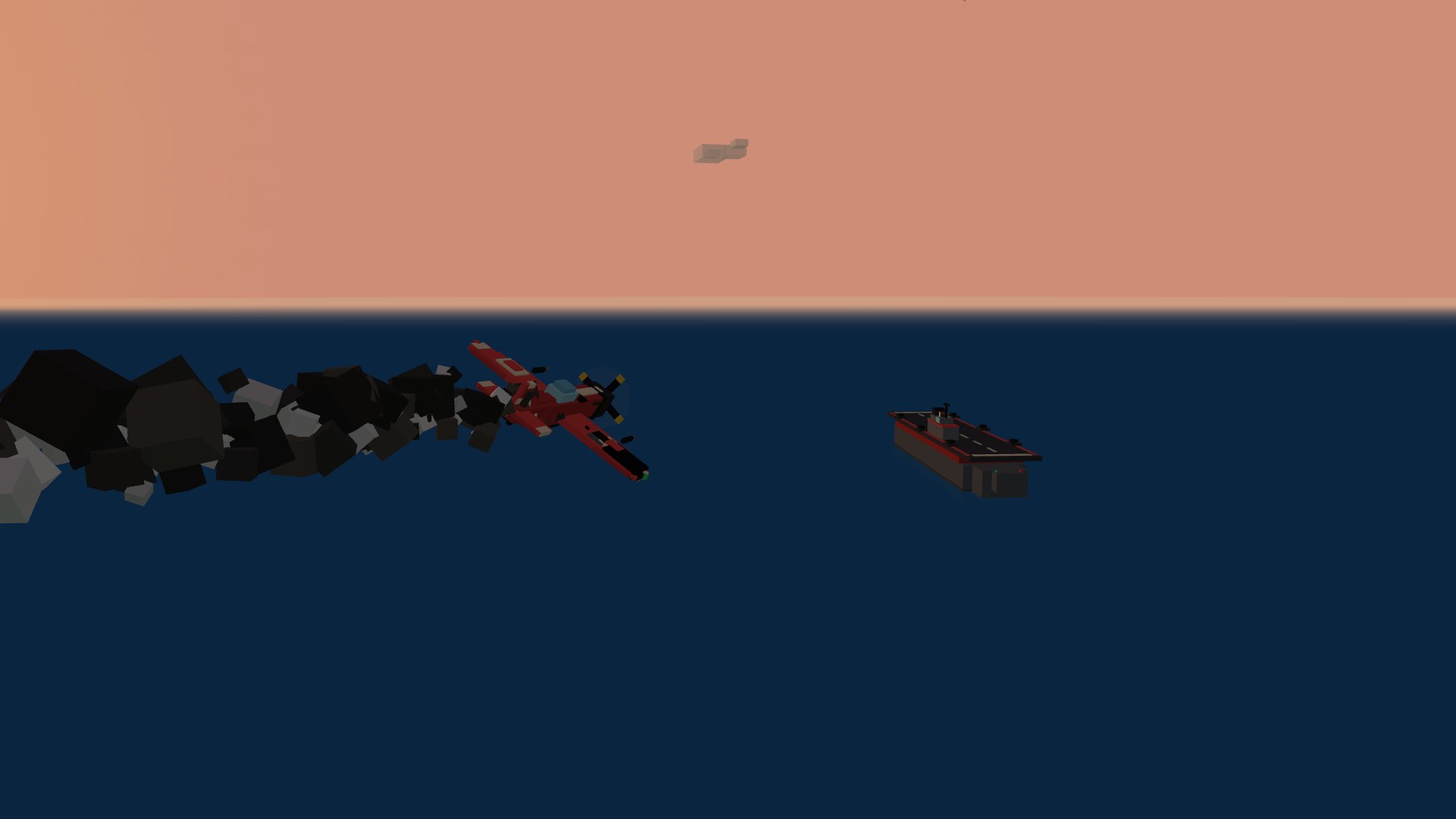
When your rounds land, you can see where. Holes punch through the skin exactly where the hits struck — small pocks from machine guns, a bigger punch from a cannon, the odd ragged tear from flak. A wing that's taking a beating shows it, and when it finally goes it shears at the break and the torn-off panel tumbles away behind you. Tails get shot through, canopies shatter, scorch spreads back from a burning engine, and a holed tank streams a fuel stain along the belly.
The hits themselves follow the real shapes now, too. A Spitfire's slim tail is a smaller target than the old box one was — line up properly behind it.
The fleet, full size
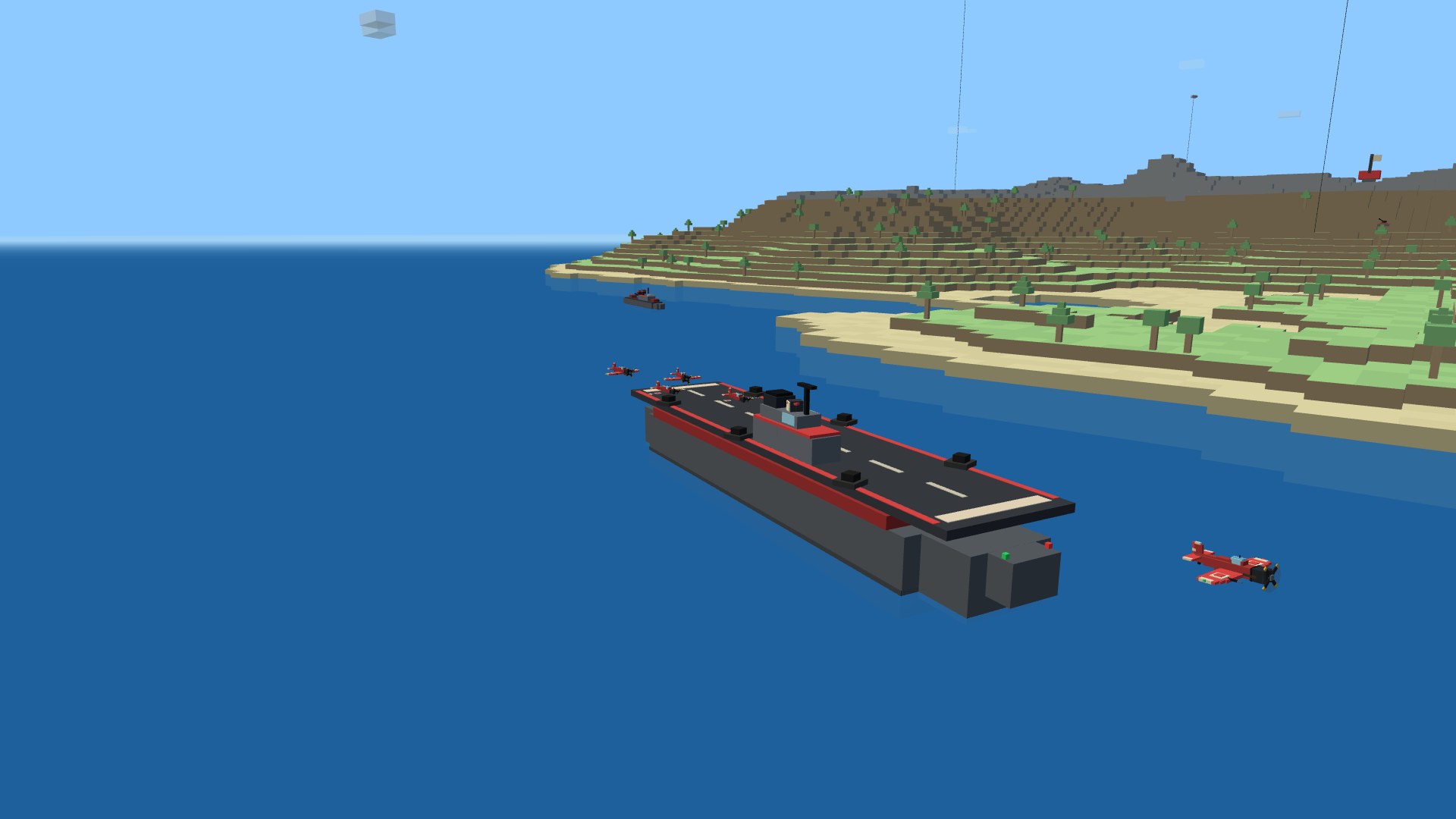
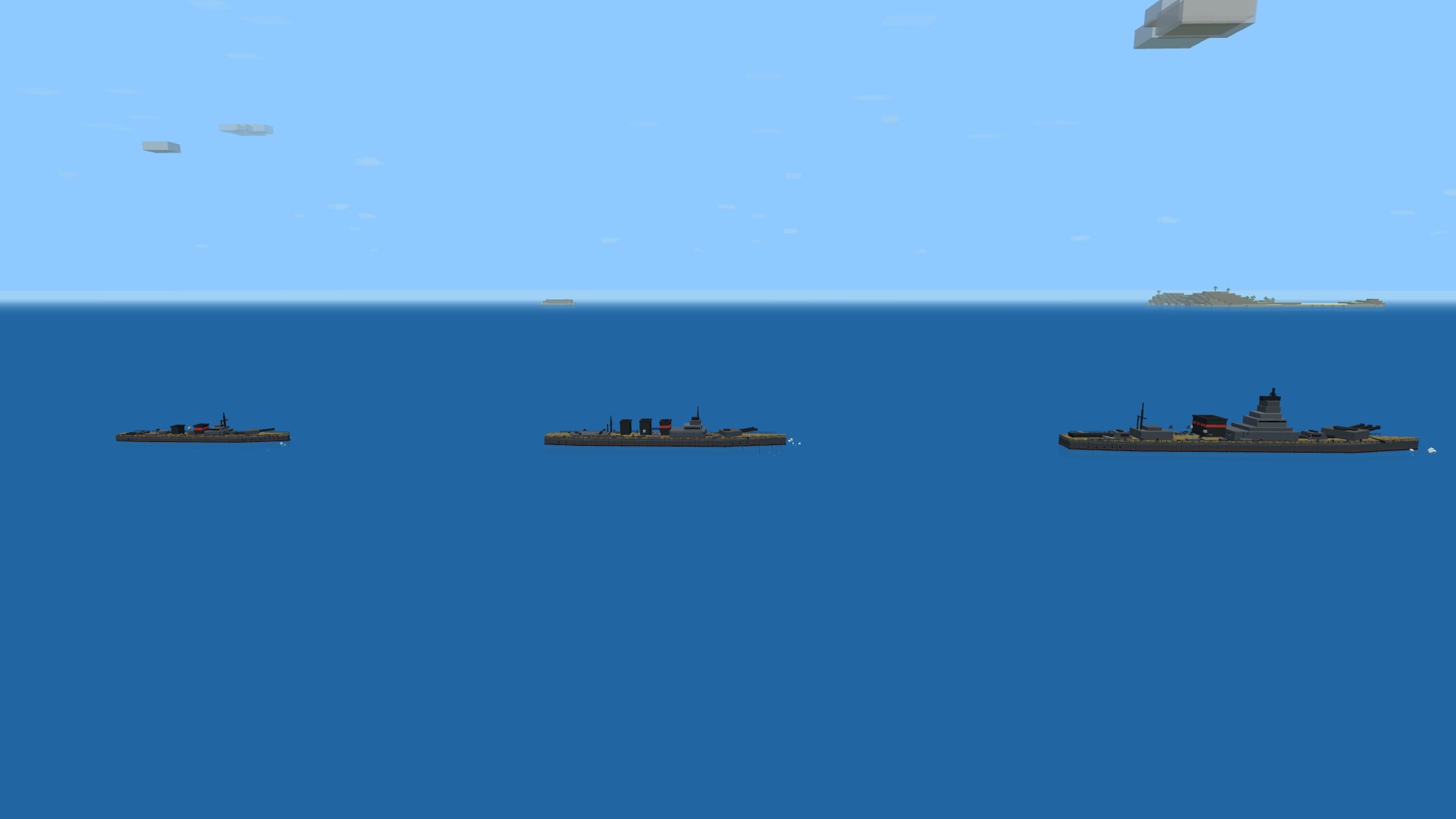
The anchored fleets are real-scale now. The carrier is an Essex, 268 metres from bow to stern, with a flight deck you launch off for real — the catapult throws you clear of the bow. The battleship is an Iowa, her three triple 16-inch turrets training and elevating as they fire, and the escorts are Fletcher-class destroyers.
Bigger ships are bigger targets: a torpedo bomber has a whole lot more hull to hit. So the fleet got tougher to match — the carrier now soaks up about three times the fish it used to, the battleship a little more than before, and a destroyer still goes down to a single well-placed torpedo. Put one into a warship and she breaks her back and goes down in two halves.
The sealift sails Liberty ships now, 134-metre freighters trailing smoke from the funnel. Sink one and she breaks in two and slips under by the stern.
Your warship, full size
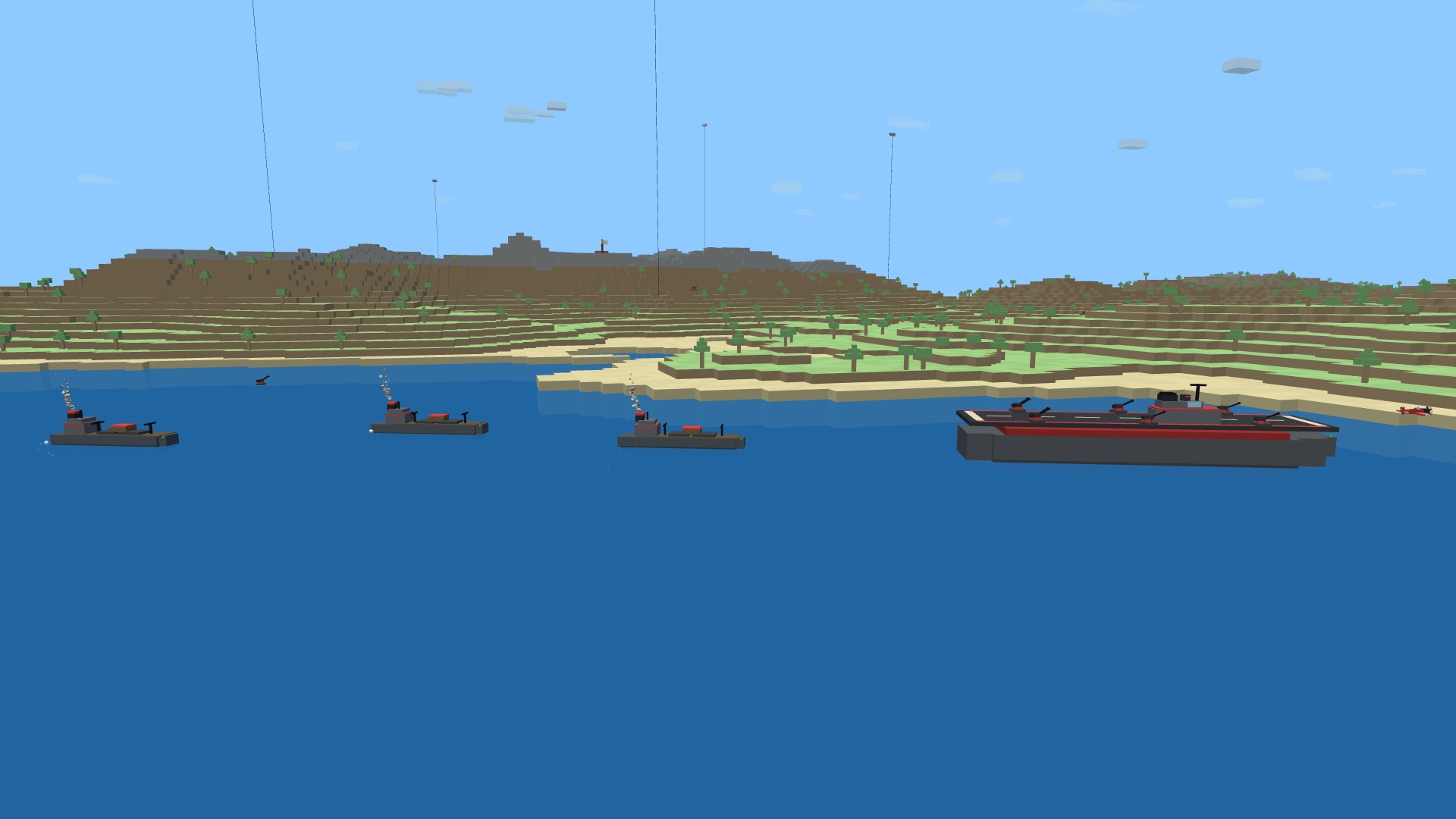
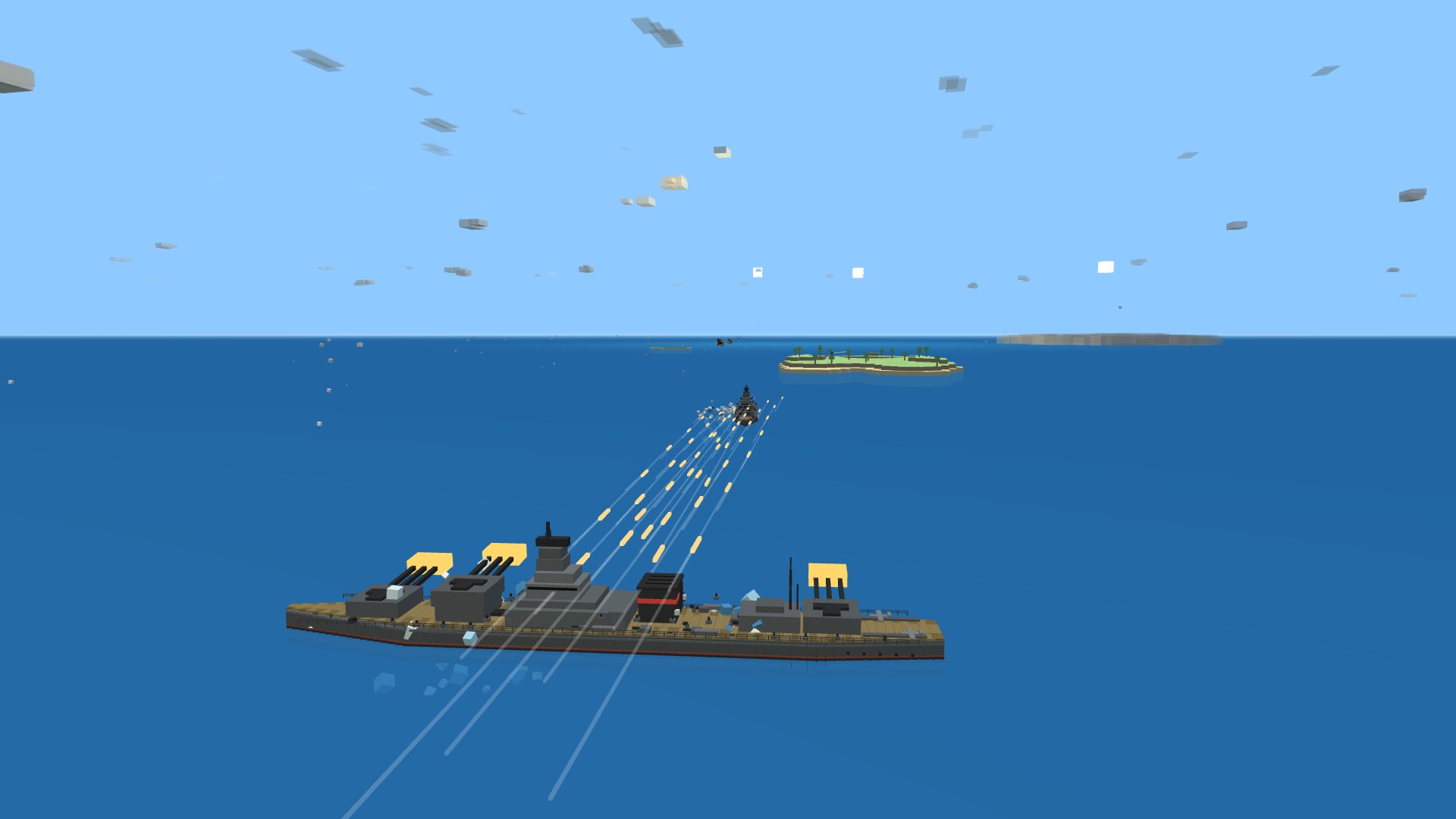
At sea, the ships you command are real-scale too. The Tachi is a 115-metre Fletcher-class destroyer, the Bastion a three-funnel County-class cruiser, the Tempest a Des Moines, and the Dreadnought a 270-metre Iowa. When the jet age rolls in, the Hornet is an Osa missile boat with four ship-killers in boxes bigger than her bridge. Every turret on your ship swings with your aim — all five of a Fletcher's mounts come round together — and the guns your class fires are the ones that flash.
Your salvo lands where your sight says it will. Each turret lays its own guns onto the spot under the crosshair, so an Iowa's three turrets, nearly a hundred and fifty metres apart, put their shells down together instead of strung out along her length. The chase view pulls back to take in the whole ship, and the gunsight rides up over the masthead so a battleship's fighting top never blocks your lay.
Bigger ships are bigger targets, so the whole fleet got tougher: every hull carries about half again as much punishment before she goes down, and the torpedoes and missiles hit harder to match. A destroyer's full spread still sinks a destroyer, and a Hornet's four missiles still put a battleship under. The shell pattern opened up with the ships, so a good salvo covers the same share of a hull it always did. Strafe or rocket a warship anywhere along her length and it counts — the bow of a battleship is no longer thin air. And the AI captains keep a proper lookout now, turning away from each other instead of sailing straight through.
Guns, installations and armour
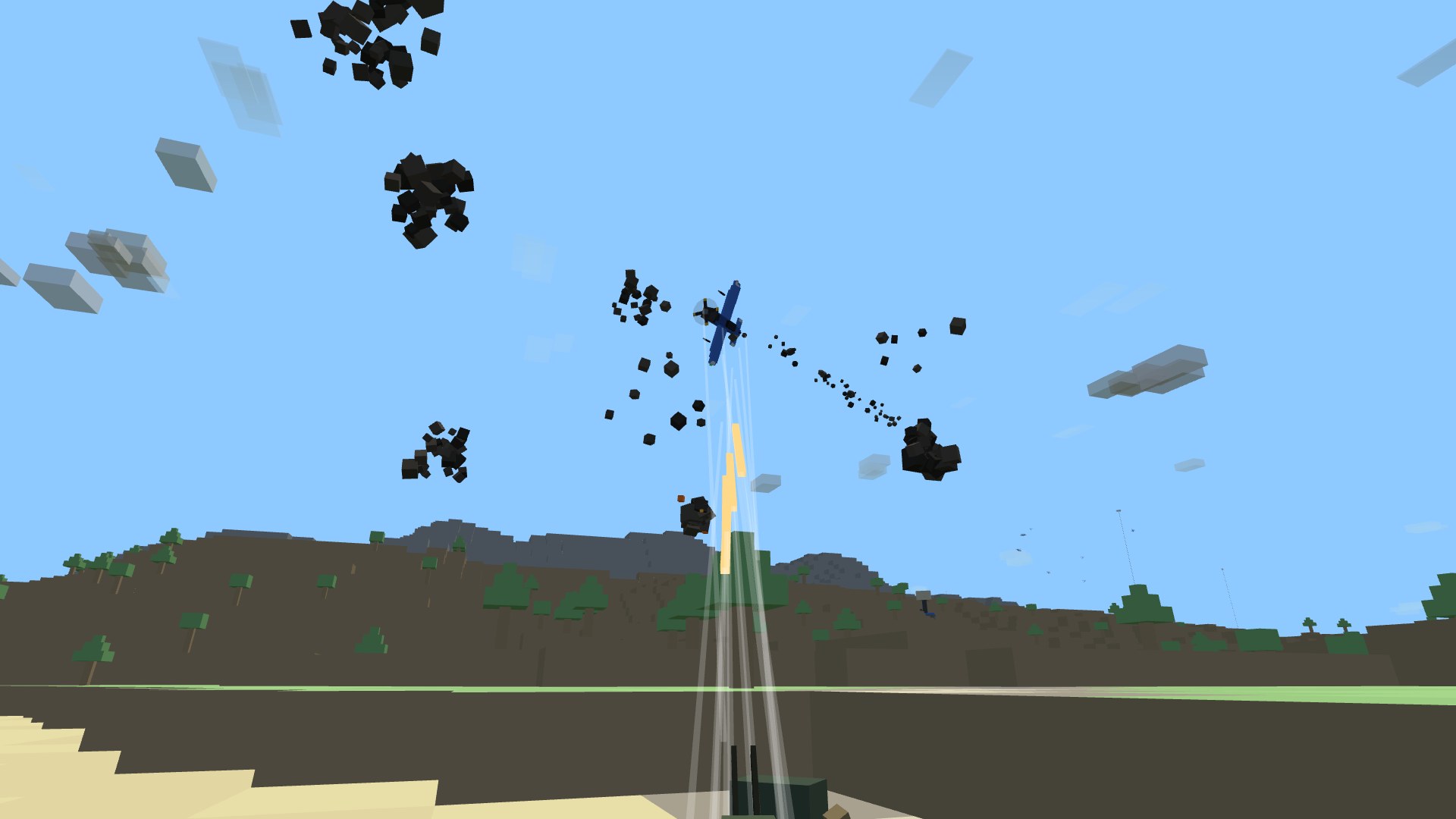
Shore flak is the Flak 88 now, sitting in its sandbag pit, and the warships' anti-aircraft mounts are twin Bofors in their deck tubs. Fort Brick's crown gun is a proper coastal battery. Radar dishes sweep the sky while they stand. Fuel farms squat behind the lines, barrage balloons ride their cables, and the searchlights stand on steel towers to cone you at night.
On the ground, the columns roll out as Shermans, quad-20 flak halftracks and M8 Greyhound scout cars, with GMC trucks hauling the supplies. On the land front the Paladin is a modern main battle tank, the Warden an infantry fighting vehicle, the Whirlwind that quad-flak halftrack and the Jackal a jeep with a recoilless rifle on the back. Their tracks roll as they drive, and anything you knock out burns where it stopped.
Airfields, towns and woods
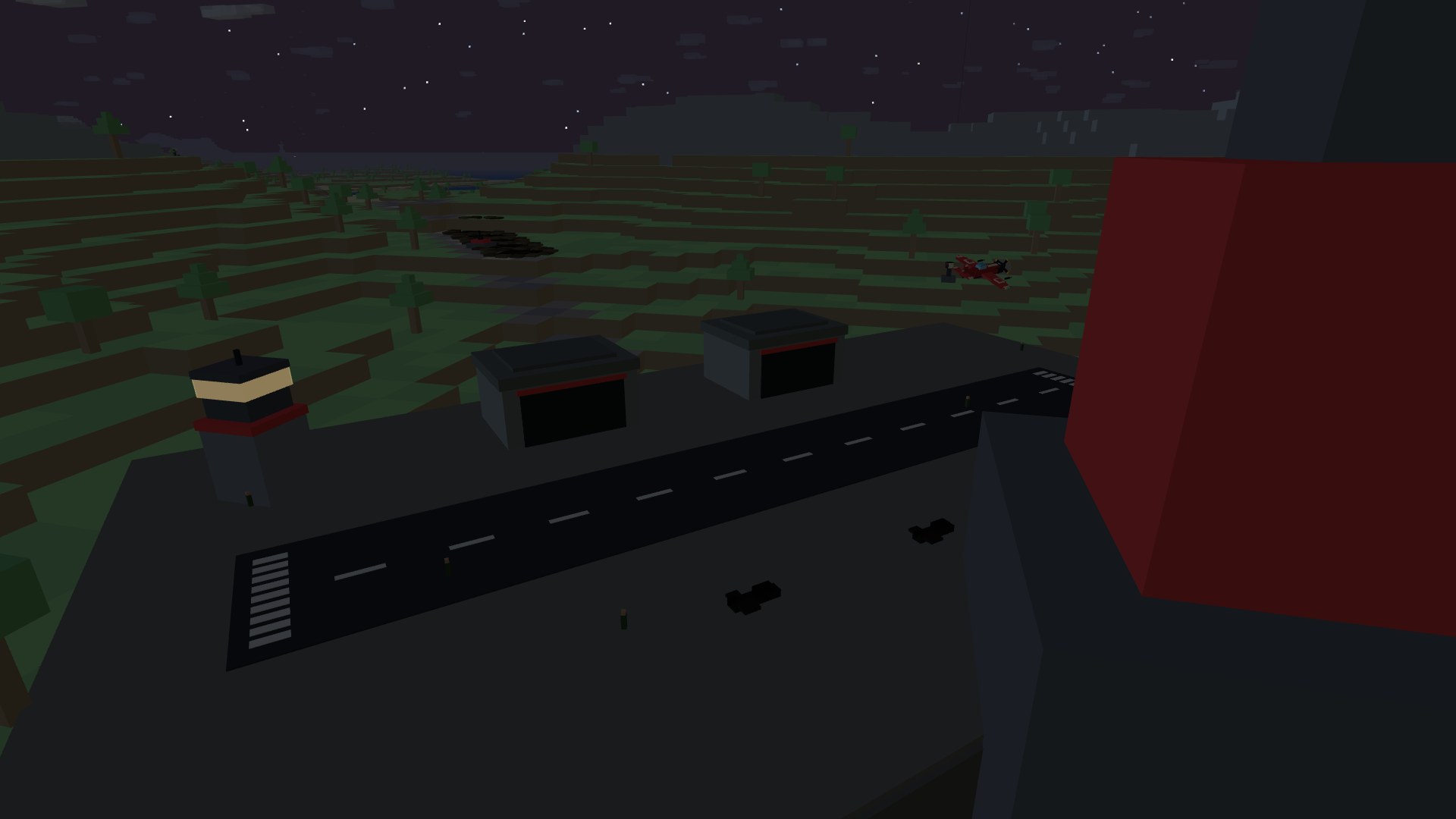
Every airfield is a proper station now: hangars with the team band over their doors, a control tower whose windows light up at dusk, barracks, quonset huts, a water tower, an ammunition bunker, pillboxes at the runway ends and a windsock that shows you the wind. The reserve fighters wait in earth revetments, noses pointed at the strip — if you want to strafe them, you'll have to thread the pass.
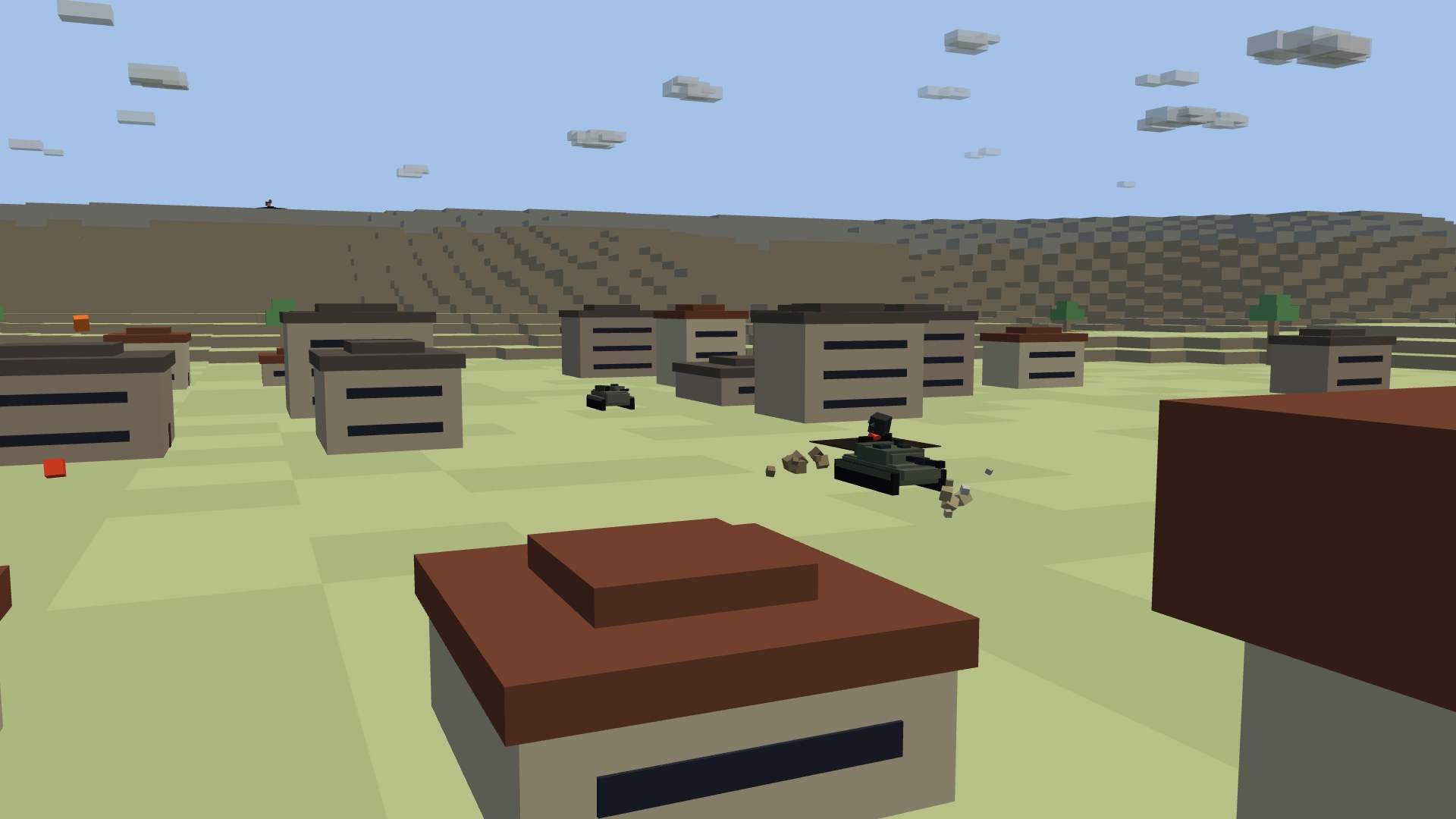
The towns are towns: cottages and barns, brick houses and half-timbered townhouses, shops, apartment blocks, a town hall — and a church steeple in every town, a landmark you can steer by from the air (and a building your tank has to drive around). Out in the Brick Gulf, Kilnfeld, Crossbrick and Brickhaven now stand in full where the front line runs through them.
The woods are woods: oak and birch groves, blocks of spruce and pine, a lone oak or a line of poplars out on the steppe.
A new look for desktop pilots
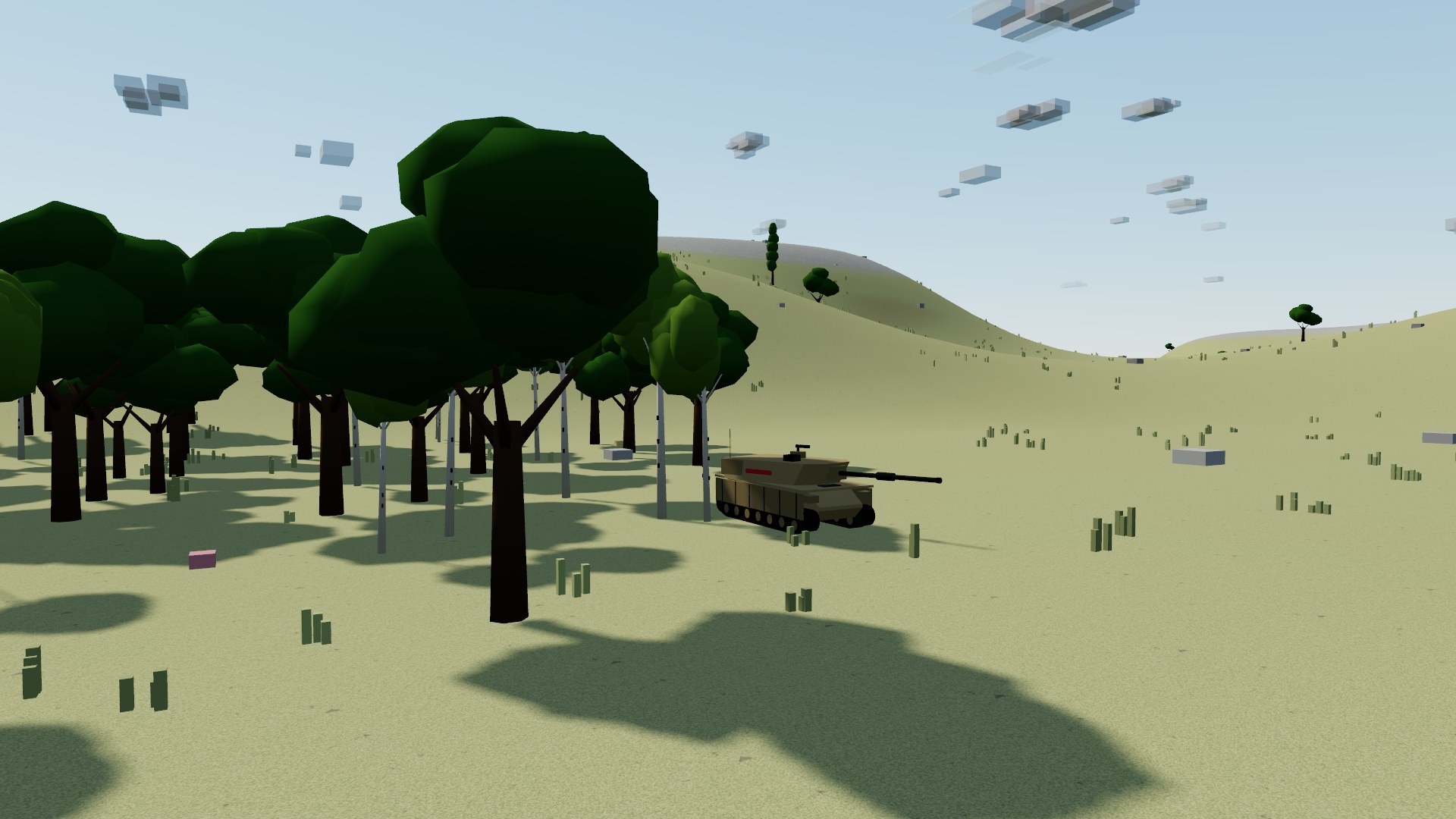
There's a new switch in Settings: High-fidelity graphics. Flip it, reload, and the world gets a real sky with the sun in it — deep blue overhead, burning orange at dusk — with sun shadows under everything: planes on the apron, a town's roofs across its streets, a tank sitting in the shade of a treeline. Tracers, fire and the sun itself carry a soft glow. It's built for desktop; phones keep the classic look they were tuned for.
Same fight
How the planes fly and how far a gun reaches are just as they were. The new models dress the same world the game has always fought over — only the warships, grown to full size, needed their toughness retuned to match. And if your connection is slow, the familiar blocky versions stand in until the new ones arrive, so you're never left waiting on a hangar door.
See you over the Brick Sea.