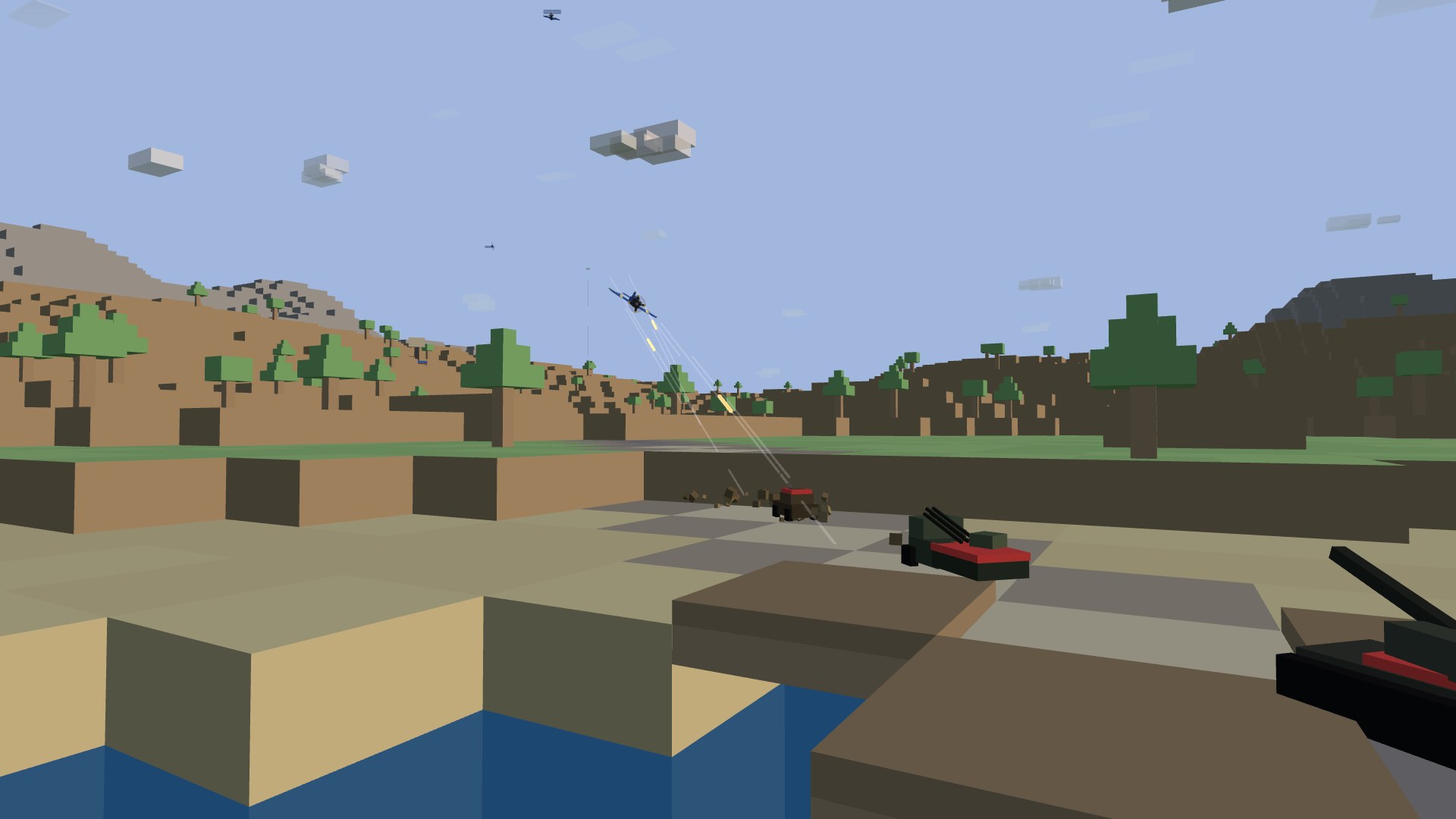
Trestles over the inlets
The roads on the island have been smooth ribbons of tarmac for a while now, with gravel shoulders and a worn centre line. Then they reached the water and turned into a staircase of wooden blocks. Not any more. Every crossing is now a timber trestle: one straight deck carrying the road out over the inlets, rails down both edges and piles marching away into the sea.
One road, all the way across
The highway, the cross road and the ring road all go out over water somewhere, and the longest crossing runs close to two kilometres across the inlet off Cobalt's base. Those bridges used to be built out of square blocks, so a road crossing on the diagonal became a zig-zag of wooden diamonds, and nothing about it looked like the road that led onto it.
Now the bridge follows the road. The deck runs straight where the highway runs straight and bends where the ring road bends. The tarmac, the gravel shoulders and the dashed centre line carry straight off the land and out onto the timber. You can follow a road from one side of an inlet to the other without a single step in it.
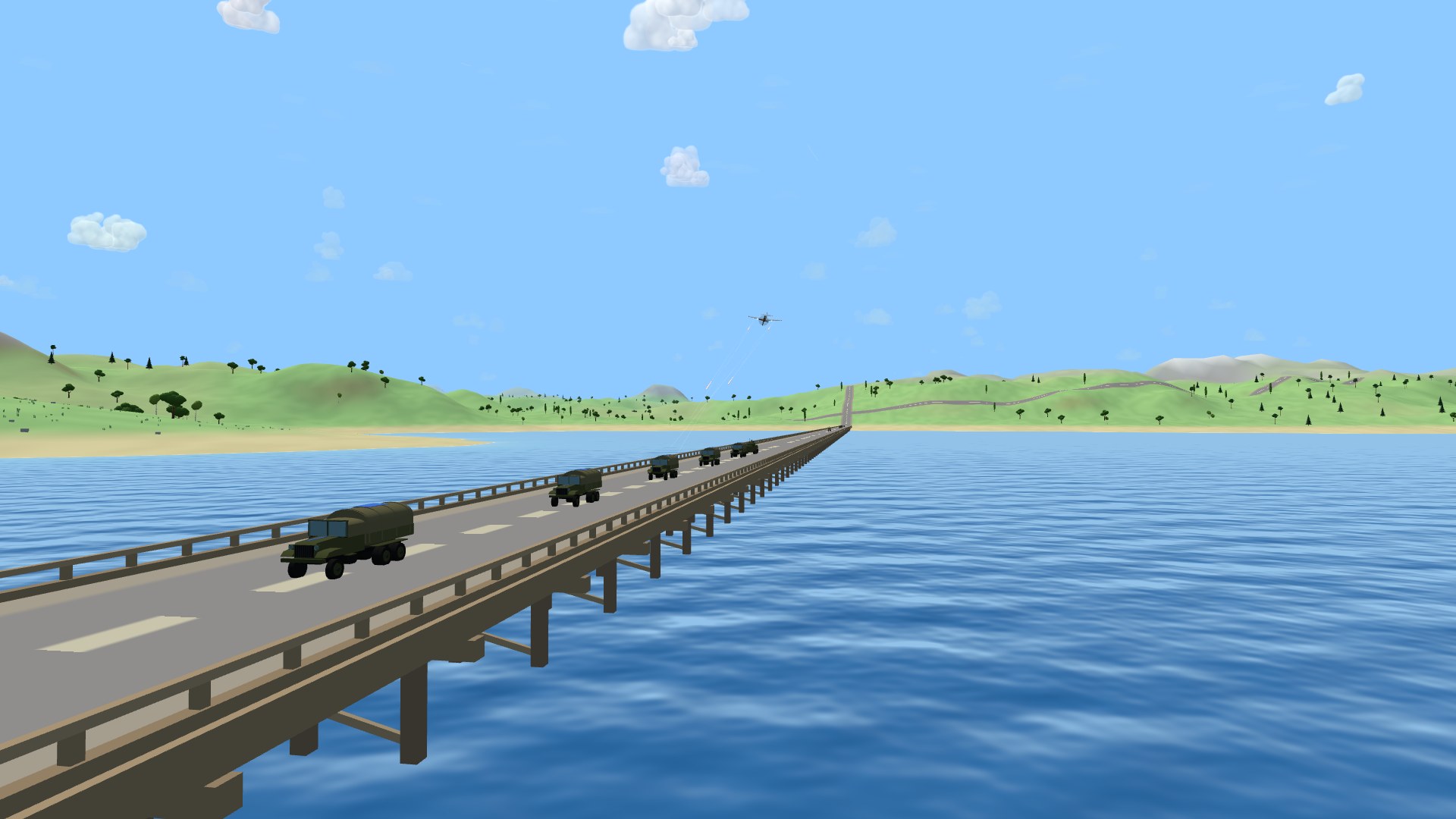
Built like a trestle
Underneath, it's built the way a wartime trestle is built. Every twelve metres a bent stands in the water: a heavy cap beam under the deck, four tarred piles down to the sea floor, and a big X of sway bracing where the piles stand tall. Up top there's a kerb and a hip-high rail on posts down both edges. Where the shore rises the deck runs straight into the bank, and the beach under a bridge is just sand now, with no stray patch of road painted beneath the planks.
Why it matters in a fight
The convoys have always crossed on these decks, and they still do, at exactly the same height. But now you can read a crossing from the air. A column out on a trestle is on a straight line with nowhere to go, so line up down the road and walk your rounds along it. If it's your convoy, that same straight line is where you want your escort, because a lorry halfway across has nowhere to hide.
Down low, the bents make a fine yardstick. Fly the length of a bridge at wave-top height and the piles flicking past, one every twelve metres, give you a feel for your speed and your height that no gauge quite does.